Posts tagged with: catholic social teaching

Jordan J. Ballor
posted by on Monday, May 13, 2013

Michael J. Gerson’s encomium to Jim Wallis’ book on the common good includes this curious paragraph:

Nearly every Christian tradition of social ethics encompasses two sorts of justice. The first is procedural justice: giving people what they deserve under contracts and the law. The second is distributive justice: meeting some needs just because human beings are human beings. This is not the same thing as egalitarianism; confiscation is not compassion. But distributive justice requires a decent provision for the vulnerable and destitute. And this is not just a matter of personal charity. Social justice is more than crumbs from the table; it depends on the existence of social and economic conditions that allow people to live, work and thrive.

Gerson should be applauded for grappling with such substantive doctrines as the common good and social justice. It is certainly brave to do so within the confines of a short opinion piece.

But his treatment of these in the context of this short op-ed illustrate the difficulty of doing so in a responsible fashion. For one thing, the common good is perhaps one of the most difficult concepts to get a handle on in the history of Christian moral reflection. In the end, Gerson summarizes it as “the set of social circumstances that allows everyone to flourish.” We might quibble with this description as not quite getting at the common good as a telos rather than a process, but given that he quotes John Paul II in the previous line, this isn’t that large of a quibble.

We might also note that even though it is commonly associated with modern Roman Catholic social thought, as Gerson notes, the idea of the common good is much more of a catholic legacy of Christianity shared by a variety of Christian traditions. See, for instance, Gerson’s claim that Wallis’ invocation of the common good is “further evidence of the intellectual advance of Catholic social teaching across Christian confessions.” I think this is probably true in the case of Wallis and many evangelicals, and in this Roman Catholic social thought has done a great service in preserving this inheritance and serving as a reminder and inspiration for those who have forgotten the place of the common good in their own tradition’s moral reflection.
Read more on Gerson on the Common Good…

Jordan J. Ballor
posted by on Thursday, May 2, 2013

As Michael Novak observes in The Spirit of Democratic Capitalism, “A successful corporation is frequently based upon the principle of subsidiarity. According to this principle, concrete decisions must be made on the level closest to the concrete reality. Managers and workers need to trust the skills of their colleagues. A corporate strategy which overlooks this principle–and many do–falls prey to all the vices of a command economy, in which all orders come from above.”

Read more on No Executive Is An Island…

Last April 16, Acton’s Rome office co-sponsored a seminar in London on “The Morality of Work, Commerce and Finance: Lessons from Catholic Social Teaching” with St. Mary Moorfields, the only Roman Catholic parish in the Square Mile and located in the very heart of London’s investment banking district.

With several astute financiers, bankers, and business executives in attendance, the seminar’s expert speakers helped them articulate and ponder the moral and vocational aspects of the financial world in which they work. The seminar’s speakers also addressed the political and legal frameworks that regulate their sectors in light of traditional free market economic philosophy and the particular Catholic social teachings that both challenge and sustain modern practices in the sector.

Participants listen attentively to Philip Booth's technical and moral-theological assessments.

Participants listen attentively to Philip Booth’s technical and moral-theological assessments.

Msgr. Martin Schlag, a moral theology professor at Rome’s Pontifical University of the Holy Cross, led off discussion with his talk “Personal Virtues in the Workplace”. Schlag spoke about the interplay of the classical virtues before raising a discussion on the uniquely Christian “theological” or supernatural virtues of faith, hope, and charity.
Read more on London’s Financial Leaders Challenged, Inspired at Acton Seminar…

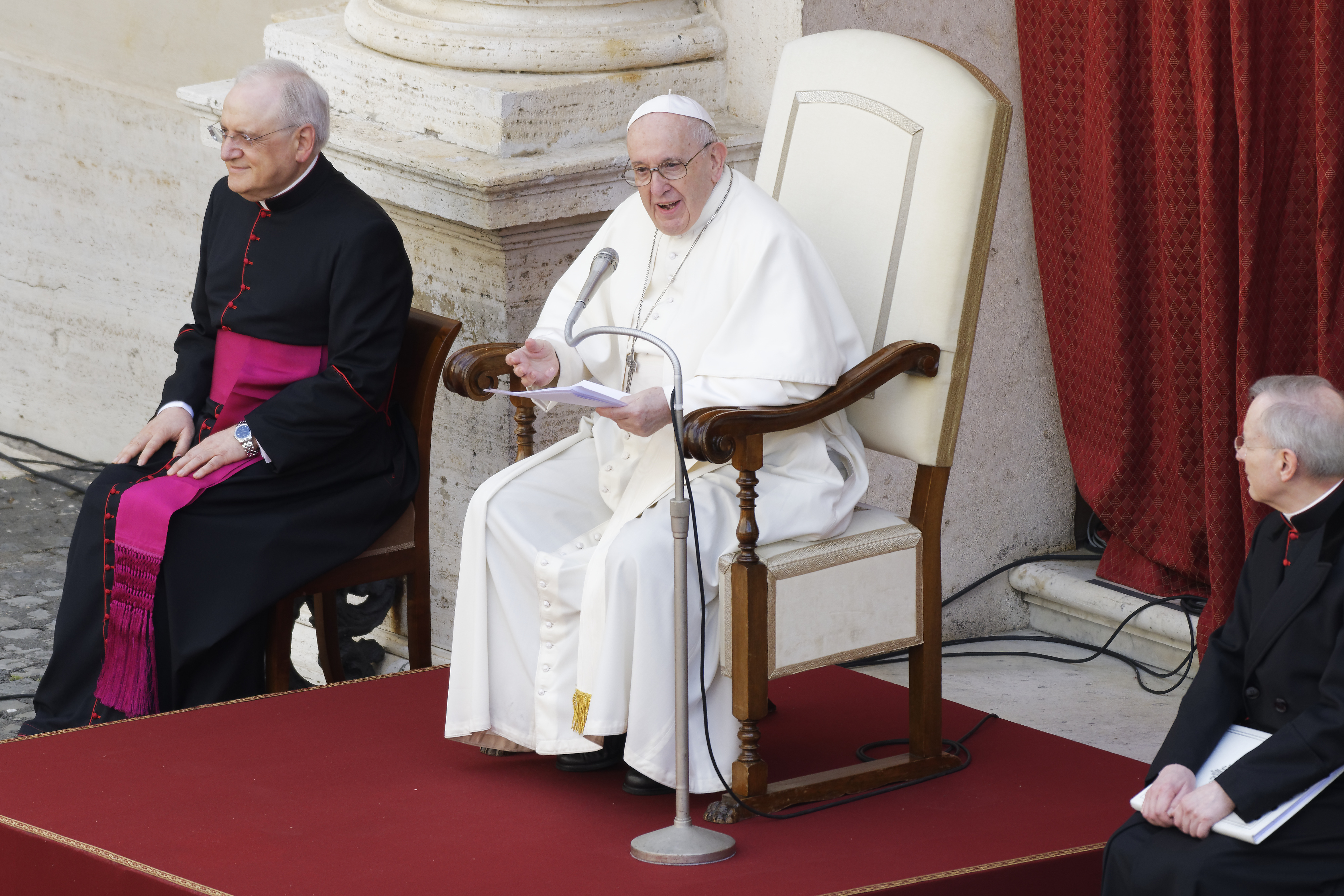
Questions about poverty and social teaching are on the forefront of Pope Francis’ mind, as he’s made convincingly clear in his young papacy. This calls for cogent thinking on the topic, according to Fr. John Flynn, LC in “Francis and Catholic Social Teaching: Debates About Economy, Equality and Poverty Sure to Continue.”

Flynn cites Jerry Z. Muller, professor of History at the Catholic University of America, who gives credit to the astonishing “leap in human progress” that capitalism has brought about, but cautions that some find the disparity between rich and poor, the powerful and the dispossessed, to be grounds for anti-capitalist sentiment. Muller points out that this type of inequality seems to be growing internationally. Read more on Neither Worshipping Nor Demonizing Capitalism…

Rev. Robert Sirico was recently featured in El Salvador’s newspaper El Diaro de Hoy. Consuelo Interiano interviewed him about the free market, and social mortgage.

Sirico begins by saying that private property isn’t just important for businesses to thrive, it’s absolutely necessary for their existence. He goes on to say that businesses and private companies are the best way to help individuals escape poverty. Companies, large or small, create opportunities for work and offer individuals a means to elevate themselves out of poverty.

Read more on Rev. Robert Sirico on ‘Social Mortgage’…

Sarah Stanley
posted by on Wednesday, April 10, 2013

Update: Acton now has a PDF of this article available. You can download a color or black and white copy of it here:

Gregg on Social Justice

Gregg on Social Justice (black & white)

There seems to be a great deal of confusion about “social justice” and what that term actually means. In order to provide some clarity, and precision, to better understand the concept, Acton Director of Research Samuel Gregg, wrote an essay for Library of Law and Liberty , published today.

He begins by looking at justice generally:

Natural law ethics has identified justice as one of the cardinal virtues ever since Aristotle commenced his treatment of justice with the general notion of “legal justice” (the terms “legal” and “general” being more-or-less interchangeable). By this, he meant comprehensive virtue with regard to relationships with other persons. Justice-as-a-virtue was henceforth understood in this tradition as having a uniquely social dimension in the sense that one of its key elements is other-directedness.

As a virtue, general justice properly understood involves one’s general willingness to promote the common good of the communities to which one belongs. Here the common good should be understood as the conditions that promote the all-round integral flourishing of individuals and communities. Another element of justice which presents itself very early in the tradition is that of duty in the sense of what we owe to others. This is closely associated with a third element: equality. This should not be understood in the sense of everyone somehow being entitled to precisely the same, regardless of factors such as need or merit. Instead it means fairness as expressed in the Golden Rule. Injustice can after all involve doing things to people that entail no violation of any prior undertaking. Robbing someone, for instance, involves no breaking of any freely-entered-into agreement with the person from whom I steal. But does anyone doubt that an injustice has been done?

These three elements—other-directedness, duty (or what might be called rights today), and the Golden Rule—are closely linked and substantially overlap with each other. But attention to all three elements underscores that the same common good which is the end of general justice requires more than simply a broad inclination on the part of individuals and groups to promote the flourishing of others and themselves. On one level, as Aquinas specifies, it is a special concern of the rulers since they have a certain responsibility to promote the common good. But Aquinas also notes that it is a concern of every citizen: that is, those who participate in some way with the ruling of the community.

Read more on Samuel Gregg: What is Social Justice?…

National Public Radio did a roundup of views on what to expect from Pope Francis on economic issues. Reporter Jim Zarroli interviewed Acton Research Director Samuel Gregg and several commentators on the Catholic left. NPR host Audie Cornish introduced Zarroli’s report by observing that the new pope “comes from Argentina, where poverty and debt have long posed serious challenges. In the past, when thrust into debates about the country’s economic future, Francis had made strident comments about wealth, inequality and the markets. Now, some Catholics are hoping their new pope will play a similar role, giving voice to the poor and exerting influence on a global scale.” But Cornish cautioned that if “some say the idea that Pope Francis is some kind of economic liberal is to misread him and the church.”

Read more on Audio: On NPR, Samuel Gregg Discusses Pope Francis and Economics…

Alejandro Chafuen, President of the Atlas Economic Research Foundation, is hoping that newly-elected Pope Francis will be able to sort out the misunderstandings of what “social justice” means in the Church today. In today’s Forbes, Chafuen suggests that “social justice” has too often meant (especially in places like the pope’s home country of Argentina) taking from the rich and giving to the poor.

Chafuen observes that the Jesuit order, to which Pope Francis belongs, has a long intellectual history when it comes to describing what social justice should be. Read more on Pope Francis: A Different Type of Social Justice?…

In a story about looming budget cuts associated with the federal sequestration, Acton Research Fellow Kevin Schmiesing was called on by Aleteia to suggest “ways Catholic social teaching might be used to guide the cuts.” Schmiesing pointed out that the “cuts” are really “only a slow-down in the rate of growth in federal spending.” More:

Read more on Kevin Schmiesing: Catholic Social Teaching and the Sequester…

There is always much to discuss after a State of the Union address, and Tuesday’s speech is no different. Sam Gregg, Director of Research at the Acton Institute, shared his thoughts:

Read more on State of the Union: The Government is Here to do Stuff for You…

Acton PowerBlog RSS

Google Plus

Twitter Feed

Facebook Fan Page

Support the Acton Institute

The Acton Institute is funded through the generous contributions of individuals such as yourself. Learn more about how you can advance the cause of freedom and virtue.