Posts tagged with: christianity

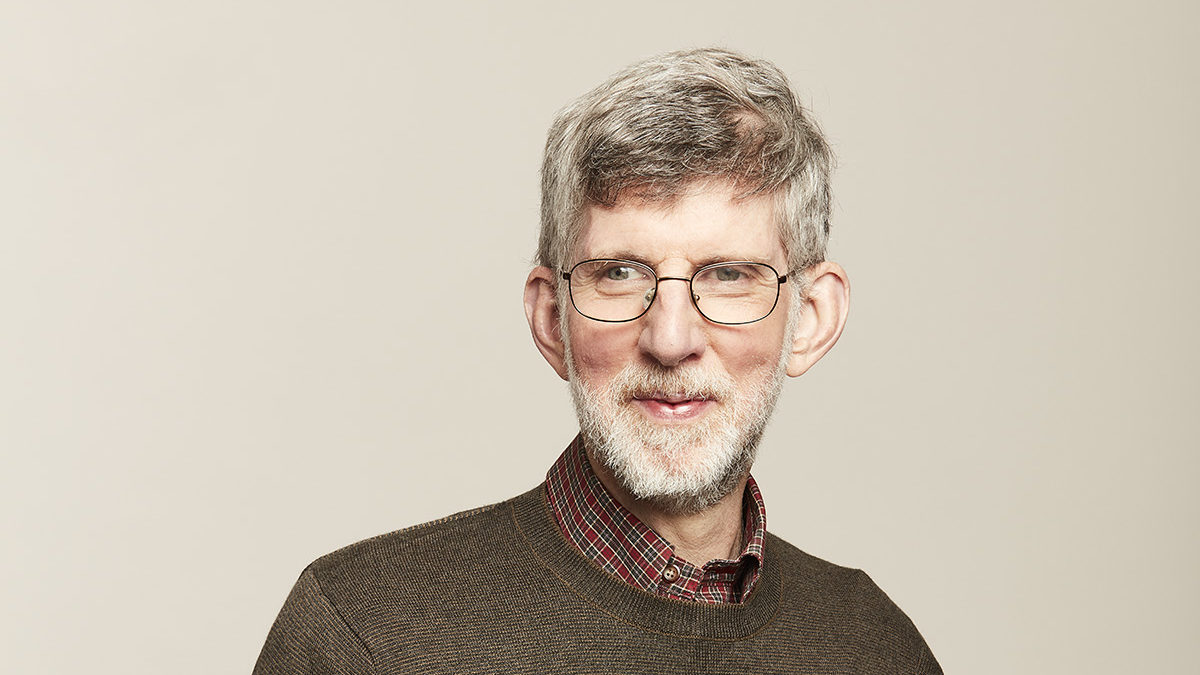
Those who’ve attended Acton University in the past know that the Evening Speakers are memorable, uplifting and often the highlight of the day for many. This year, one speaker is Marina Nemat, currently teaching at the University of Toronto. Nemat is set to speak on her book, Prisoner of Tehran. The memoir details her imprisonment, with a life sentence, at age 16 in the notorious Evin Prison in Tehran during the Khomeini Regime.

While the memoir, by its nature, is extremely personal, it touches on the themes of religious and intellectual liberty that are foundational to the learning at Acton University. In fact, Nemat was imprisoned for the “crime” of asking her calculus marina nematteacher to teach calculus, rather than spouting the politics of the regime. Her request led to her fellow students walking out of class, and Nemat found herself accused of communist and anti-revolutionary activities.

Part of the memoir focuses on Nemat’s Christian faith, a faith passed on to her from her Russian grandmother. While Nemat’s parents were distant emotionally, her grandmother was a source of strength for Nemat, especially as Nemat grew to learn that her grandparents had survived the Russian revolution. Read more on Acton University Evening Speaker Marina Nemat: ‘Prisoner Of Tehran’…

Jordan J. Ballor
posted by on Monday, May 13, 2013

Michael J. Gerson’s encomium to Jim Wallis’ book on the common good includes this curious paragraph:

Nearly every Christian tradition of social ethics encompasses two sorts of justice. The first is procedural justice: giving people what they deserve under contracts and the law. The second is distributive justice: meeting some needs just because human beings are human beings. This is not the same thing as egalitarianism; confiscation is not compassion. But distributive justice requires a decent provision for the vulnerable and destitute. And this is not just a matter of personal charity. Social justice is more than crumbs from the table; it depends on the existence of social and economic conditions that allow people to live, work and thrive.

Gerson should be applauded for grappling with such substantive doctrines as the common good and social justice. It is certainly brave to do so within the confines of a short opinion piece.

But his treatment of these in the context of this short op-ed illustrate the difficulty of doing so in a responsible fashion. For one thing, the common good is perhaps one of the most difficult concepts to get a handle on in the history of Christian moral reflection. In the end, Gerson summarizes it as “the set of social circumstances that allows everyone to flourish.” We might quibble with this description as not quite getting at the common good as a telos rather than a process, but given that he quotes John Paul II in the previous line, this isn’t that large of a quibble.

We might also note that even though it is commonly associated with modern Roman Catholic social thought, as Gerson notes, the idea of the common good is much more of a catholic legacy of Christianity shared by a variety of Christian traditions. See, for instance, Gerson’s claim that Wallis’ invocation of the common good is “further evidence of the intellectual advance of Catholic social teaching across Christian confessions.” I think this is probably true in the case of Wallis and many evangelicals, and in this Roman Catholic social thought has done a great service in preserving this inheritance and serving as a reminder and inspiration for those who have forgotten the place of the common good in their own tradition’s moral reflection.
Read more on Gerson on the Common Good…

Jordan J. Ballor
posted by on Wednesday, May 8, 2013

In this week’s Acton Commentary, I explore the dynamics between gift, gratitude, and stewardship. The proper response to a gift that has been given is gratitude, and the proper expression of gratitude comes in faithful stewardship.

Read more on Tim Riggins’ Gift…

climate-changeDo you believe that Jesus will return to Earth someday? Then you probably don’t care about environmental devastation and the catastrophic loss of life of future generations.

That’s the absurd conclusion drawn in an academic paper published in the latest issue of Political Research Quarterly. In their article, “End-Times Theology, the Shadow of the Future, and Public Resistance to Addressing Global Climate Change,” David C. Barker of the University of Pittsburgh and David H. Bearce of the University of Colorado test the following hypothesis:

Citizens who believe in Christian end-times theology are less likely to see global warming as a policy problem that requires immediate government action, compared to citizens who do not hold end-times beliefs.

Initially, I thought by “Christian end-times theology” they might be referring to premillinial dispensationalism, a eschatological view held by many American Evangelicals, that was popularized in the Left Behind series of novels. But the authors make it clear that they are not just referring to dispensationalists but to all Christians who believe in the Second Coming.
Read more on Is Belief in the Second Coming of Christ Bad for Creation?…

Emperor Theodosius Forbidden by St Ambrose To Enter Milan Cathedral (Anthony van Dyck, 1620)

In the latest issue of Renewing Minds, a journal of Christian thought published by Union University, I examine two different visions of religious liberty. They are roughly analogous to the two versions of the “empty shrines” of secularism described by Michael Novak and George Weigel, respectively, as well as to the visions of the American and the French Revolution. One has to do with the freedom of the church from state control, and the other has to do with freeing the public square from religion.

Read more on Neuhaus’ Law and Religious Liberty…

While some environmentalists claim that Judaism and Christianity have been neglectful of environmental concerns, the history of these faith traditions shows otherwise. Matthea Brandenburg looks at the patristic witness, using the recent work of an Eastern Catholic scholar who argues that prayer and a healthy, every-day asceticism can keep relations between Creation and Creator on solid footing. What’s more, we should also be cautious about secularized views of nature offered by contemporary Gnostics—technocrats with “special” knowledge. Subscribe to the free, weekly Acton News & Commentary and other publications here.
Read more on Commentary: Christianity, the Environment, and Modern Gnostics…

Joe Carter
posted by on Tuesday, April 23, 2013

Orthodox-Bishops-KidnappedTwo Syrian Orthodox bishops have been abducted by terrorists in a suburb of Aleppo in Syria as they were returning from Antioch (Antakya, Turkey). While both clergymen are believed to be alive, their driver was killed during the attack:

Read more on Orthodox Bishops Kidnapped By Terrorists…

This past weekend, I had the privilege to attend and present a paper at the 2013 Kuyper Center for Public Theology conference at Princeton Seminary. The conference was on the subject of “Church and Academy” and focused not only on the relationship between the institutions of the Church and the university, but also on questions such as whether theology still has a place in the academy and what place that might be. The discussion raised a number of important questions that I would like to reflect on briefly here.

In the first place, I was impressed by Dr. Gordon Graham’s lecture on the idea of the Christian scholar. He began by exploring a distinction made by Abraham Kuyper in his work Wisdom & Wonder. Kuyper writes (in 1905),
Read more on Christian Scholarship and the Crisis of the University…

albert-mohler1In a recent post on leadership and stewardship, Albert Mohler argues that although “Christians are rightly and necessarily concerned about leadership,” we often exhibit a tendency to “aim no higher than secular standards and visions of leadership.”

Instead, Mohler argues, the Christian is called to “convictional leadership,” something defined by fundamental Biblical beliefs that are “transformed into corporate action,” rather than a general deference to the status quo of secularist thinking:

Out in the secular world, the horizon of leadership is often no more distant than the next quarterly report or board meeting. For the Christian leader, the horizon and frame of reference for leadership is infinitely greater. We know that our leadership is set within the context of eternity. What we do matters now, of course, but what we do matters for eternity, precisely because we serve an eternal God and we lead those human beings for whom he has an eternal purpose.

In the past, I’ve described this as a tension between “earthbound thinking” and a more transcendent economic order, one in which we are driven by active obedience to God, empowered and directed by the wisdom of the Word and the power of the Holy Spirit. Even for Christians, it can be easy to acknowledge God’s overall message even while pursuing our own humanistic methods to pursue it — embracing his message of salvation, redemption, love, grace, and mercy, even as we look to our own earthbound plans and schemes for ways to “implement” God’s will. Read more on Albert Mohler on Leadership, Stewardship, and the Sovereignty of God…

Jordan J. Ballor
posted by on Wednesday, April 3, 2013

Anthony Bradley revisits the thought of Abraham Kuyper as a way of understanding the relationship between creation, Christ, and culture.

Over at the Hang Together blog, Greg Forster follows up on a series of ruminations about the gospel described as both a “pearl” and a “leaven.”

Read more on In Christ Things ‘Hang’ Together…

Acton PowerBlog RSS

Google Plus

Twitter Feed

Facebook Fan Page

Support the Acton Institute

The Acton Institute is funded through the generous contributions of individuals such as yourself. Learn more about how you can advance the cause of freedom and virtue.