Posts tagged with: common good


Comments

Kenneth Spence
posted by on Monday, August 1, 2011

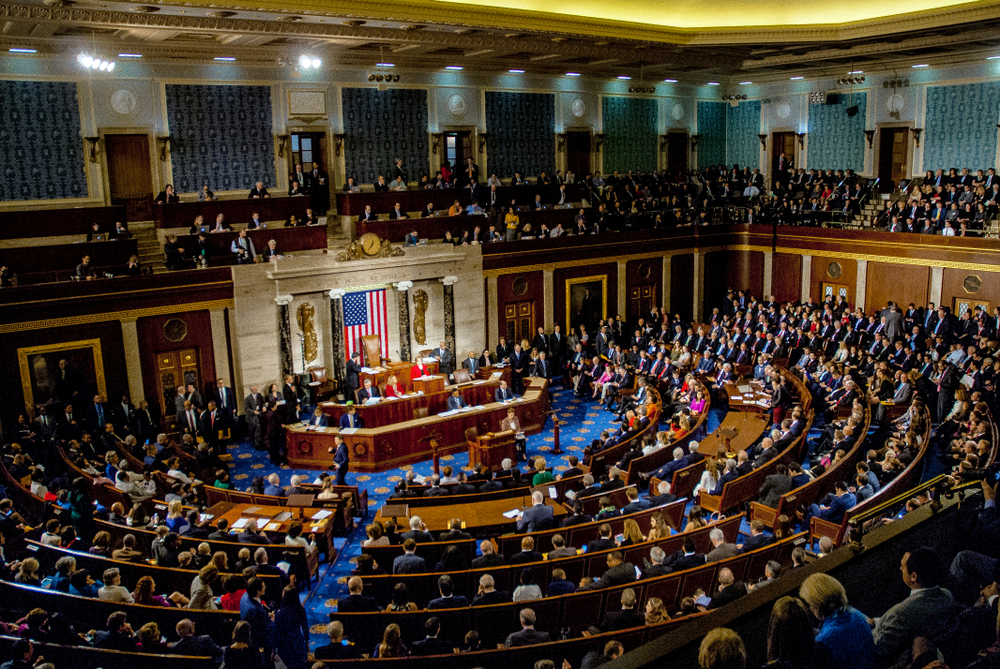
It looks like Congress will vote later today or this evening to raise the debt ceiling and avert a possible default by the United States Treasury. How the debt ceiling compromise will fair when measured against Acton’s Principles for Budget Reform it is too early to know, but one thing is certain: if the deal contains a single budget cut for even the most ineffective of social programs, we’ll hear screams of protest from Jim Wallis and his Circle of Protection.

Read more on What the Common Good Isn’t…


Comments

Ray Nothstine
posted by on Thursday, July 28, 2011

In my 2009 commentary addressing the nation’s debt crisis I included words from Admiral James B. Stockdale. The full quote comes from an essay on public virtue from the book Thoughts of A Philosophical Fighter Pilot. In his 1988 publication, Stockdale declared:

Read more on Circling the Sacred Debt Wagons…


Comments

John Couretas
posted by on Tuesday, January 18, 2011

With health care moving back to center stage in Washington, we’re publishing Dr. Donald Condit’s Acton monograph A Prescription for Health Care Reform as a free eBook readable in a variety of formats. This excellent work continues to be available for $6 (paperback) in the Acton Bookshoppe.

Read more on Free eBook: A Prescription for Health Care Reform…


Comments

John Couretas
posted by on Monday, January 10, 2011

From the Jan. 5 Acton News & Commentary. This is an edited excerpt of “Health-Care Counter-Reform,” a longer piece Dr. Condit wrote for the November 2010 issue of the Linacre Quarterly, published by the Catholic Medical Association. For more on this important issue, see the Acton special report on Christians and Health Care. Dr. Condit is also the author of the 2009 Acton monograph, A Prescription for Health Care Reform, available in the Book Shoppe.

Obamacare and the Threat to Human Dignity

By Dr. Donald P. Condit

Since President Obama signed the Patient Protection Act into law in March 2010, the acrimonious debate on this far-reaching legislation has persisted. For many, the concerns over the Obama administration’s health care reform effort are based on both moral and fiscal grounds. Now, with House Republicans scheduling a vote to repeal “Obamacare” in the days ahead, the debate is once again ratcheting up.

Perceived threats to the sanctity of life have been at the heart of moral objections to the new law. Despite a March 2010 executive order elaborating the Patient Protection Act’s “Consistency with Longstanding Restrictions on the Use of Federal Funds for Abortion,” many pro-life advocates fear a judicial order could reverse long-standing Hyde amendment restrictions on the use of federal tax dollars for abortion. Impending Medicare insolvency and the Patient Protection Act’s establishment of an “independent payment advisory board” to address treatment effectiveness and cost suggest bureaucratic restrictions on the horizon for medical care of the elderly and disabled.

The objections made on fiscal grounds are serious. Prior to the 2008 presidential election, Barack Obama voiced concern for 47 million Americans without health insurance. More recently, supporters of this legislation focused on 32 million Americans, with 15 million immigrants and others left out of the equation, yet still requiring care in United States emergency rooms. The Patient Protection Act increases eligibility for Medicaid recipients, yet state budgets are severely strained with their current underfunded medical obligations. Moreover, doctors struggle to provide health-care access to Medicaid patients when reimbursed below the overhead costs of delivering care.

Who Should Pay?

The perception among consumers of third-party responsibility for health, including payment for health-care resource consumption, is the major factor for unsustainable escalation of medical spending in the United States. Yet the Patient Protection Act augments third-party authority and threatens doctor-patient relationship autonomy, by increasing responsibility of government and employers for health care. Patients and physicians will face increasing involvement of third parties in decision making in exam rooms and at the bedside. Read more on Obamacare and the Threat to Human Dignity…


Comments

John Couretas
posted by on Wednesday, March 24, 2010

A new commentary from Dr. Donald Condit. Also see the Acton Health Care resource page.

+++++++++

Health Care Rights, and Wrongs

By Dr. Donald P. Condit

As Speaker Nancy Pelosi promoted passage of Sunday’s health care reform bill, she invoked Catholic support. However, those who assert the right to health care and seek greater responsibility for government as the means to that end, are simply wrong. This legislation fails to comport with Catholic social principles.

Claiming an entity as a right requires clear thinking about who possesses a claim to something while defining who must fulfill this obligation. We can clearly agree on responsibility to care for our neighbor and yet not promote federal dominion over doctors and nurses.

Some mistakenly quote Pope John XXIII‘s 1963 Encyclical Letter Pacem In Terris (Peace on Earth) discussing “the right to live… the right to bodily integrity and to the means necessary for the proper development of life, particularly food, clothing, shelter, medical care, rest, and, finally, the necessary social services (11).” In this context, the Holy Father speaks of health care as a natural right, with corresponding responsibilities, not as a direct obligation of the state. Nowhere in Pacem In Terris is government assigned accountability for food, clothing, shelter or health care.

Archbishop Charles J. Chaput recently reiterated the Church’s understanding of health care as a right. “At a minimum, it certainly is the duty of a just society. If we see ourselves as a civilized people, then we have an obligation to serve the basic medical needs of all people, including the poor, the elderly and the disabled to the best of our ability.” Yet, there are options for society to meet this duty apart from the federal government. Read more on Health Care Rights, and Wrongs…


Comments

William Luckey
posted by on Saturday, November 22, 2008

I cannot tell you how many times Catholics have used “the common good” as an excuse for more government involvement in peoples’ lives and the installing of socialistic, “spread the wealth” programs. This version of the common good is the foundation for some people’s idea of distributive justice, but actually it is based on the “Robin Hood fallacy” of robbing from the rich and giving to the poor.

Read more on The Common Good as an Excuse to Override Human Dignity…


Comments

John Couretas
posted by on Friday, October 31, 2008

According to a report from the Zenit News Service, Cardinal Renato Martino, president of the Pontifical Council of Justice and Peace, recently insisted that the “logic” of the market be changed. He said that the logic “was till (sic) now that of maximum gain, and therefore the most investments possible directed toward obtaining maximum benefit. And this, according to the social doctrine of the Church, is immoral.” This is because, according to the Cardinal, the market “should be able to benefit not just those who invest capital, but those who participate in the step of making it grow, that is, those who work.”

Read more on Why Not Learn Some Economics First?…


Comments

Jordan J. Ballor
posted by on Friday, May 4, 2007

…at least not yet.

Check out this disheartening AP story, “Judge: Cleaner owes me $65 million for pants; 2 years of litigation x 1 pair of trousers = headaches for family business.”

Read more on In this Case, the Loser Isn’t Paying……


Comments

Jordan J. Ballor
posted by on Wednesday, May 2, 2007

Could the early socialists have envisioned an organization such as Wal-Mart or predicted the thousands of jobs created by such a firm? In this week’s Acton Commentary, Rev. Robert A. Sirico examines the “common good” and free markets in this excerpt from a recent speech at the first annual Free Market Forum, sponsored by Hillsdale College’s Center for the Study of Monetary Systems and Free Enterprise.

Read more on Free Economies and the Common Good…


Comments

Jordan J. Ballor
posted by on Tuesday, August 29, 2006

Rev. Robert A. Sirico, president of the Acton Institute, will address “Capitalism and the Common Good: The Ten Pillars of the Moral Economy” on September 14, 2006, at The University Club of Chicago.

Read more on Sirico on Capitalism and the Common Good…

Support the Acton Institute

The Acton Institute is funded through the generous contributions of individuals such as yourself. Learn more about how you can advance the cause of freedom and virtue.