Posts tagged with: david brooks

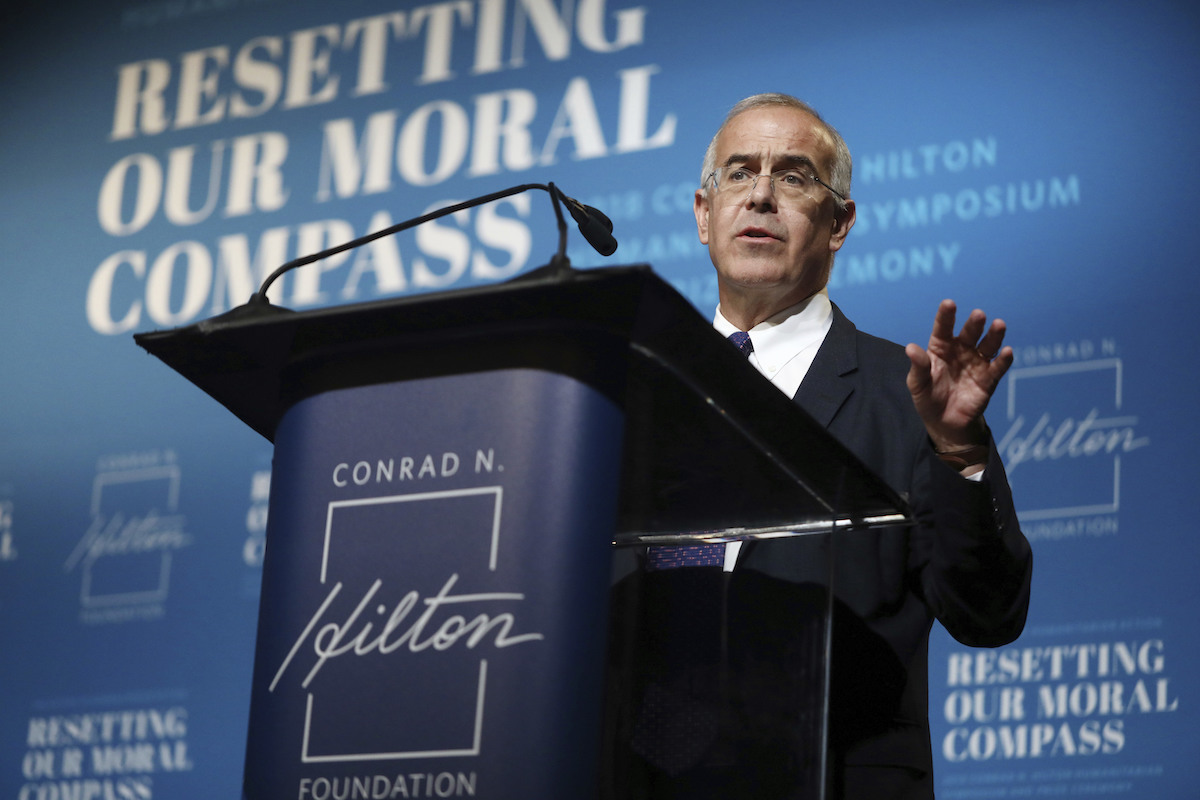
David Brooks recently took on the conservative movement for relying too heavily on pro-market arguments and tired formulas rather than emphasizing its historic features of custom, social harmony, and moral preservation.

As I’ve already noted in response to the Brooks piece, I agree that conservatism needs a renewed intellectual foundation brought about by a return to these emphases, yet I disagree that a lopsided devotion to “economic freedom” is what’s stalling us. If we hope to restore traditionalist conservatism, we’d do well to recognize that this means restoring economic conservatism along with it. Brooks is upset that dogmatic pro-market folks have seized the Republican Party, yet this is the same Republican Party that nominated the architect of Romneycare and can’t seem to get serious about the deficit.

Conservatism is faltering all around, and the reasons for each “sect’s” demise are more or less interrelated. As I’ve written elsewhere, we need to restore a holistic conservative imagination that ties its social and economic strains together by grounding them both in Russell Kirk’s “enduring moral order.”

For David Brooks, restoration is all about “balance,” but for the true conservative, it needs to be about integration.
Read more on David Brooks, Economic Liberty, and the Real Threat to Social Preservation…

The noir heroes like Sam Spade in “The Maltese Falcon” served as models for a generation of Americans, says David Brooks. The new generation of apolitical social entrepreneurs could learn from them too:
Read more on What Sam Spade Can Teach Social Entrepreneurs…

On National Review Online, Acton Research Director Samuel Gregg reacts to musings by conservative writers David Brooks and Michael Gerson about Rick Santorum’s political rise in the GOP primaries and how his social views might be expressed in government policy. Would a President Santorum usher in a smaller but more “transformational” role for the state in addressing social ills? Gregg:

Read more on Samuel Gregg: The Problem with Compassionate Conservatism…

On the National Catholic Register, Kathryn Jean Lopez takes a look at the strong finish by Rick Santorum in the Iowa Caucuses. She writes that the candidate’s dead heat finish with Mitt Romney marks “the emergence of a different kind of Catholic candidate in American politics, one who refuses to give up the fight on social justice — substantively and rhetorically — in practice and linguistics.” Lopez interviews Acton Research Director Samuel Gregg, who observes that “where Santorum adds something distinctive to present economic debates is his willingness to envelop them in substantive moral arguments.”

Read more on Samuel Gregg: Santorum, Tocqueville, and the Economy…

Jordan J. Ballor
posted by on Tuesday, September 7, 2010

Today’s NYT has an op-ed by David Brooks that’s been getting good cyber-circulation, “The Gospel of Wealth.” Brooks highlights in particular Southern Baptist pastor David Platt, who is touted as the youngest mega-church leader in the country. Rebelling in many ways from the new traditions associated with mega-churches, Brooks says Platt inhabits the nexus between “between good and plenty, God and mammon,” spirituality and materiality, and that Platt “is in the tradition of those who don’t believe these two spheres can be reconciled.”

Read more on Toward Sustainable Wealth and Profit…

John Armstrong
posted by on Thursday, November 2, 2006

I saw the most fascinating and lively exchange between two political conservatives on C-Span Book TV last weekend. It featured Andrew Sullivan, the homosexual activist who is actually a libertarian politically, and David Brooks, the Jewish columnist for The New York Times. Brooks has an unusually keen insight into evangelicalism, as can be seen in his frequently thoughtful references to it. He is also a wonderfully nuanced political conservative of the very best sort.

Read more on Recovering the Soul of Conservatism…

Acton PowerBlog RSS

Google Plus

Twitter Feed

Facebook Fan Page

Support the Acton Institute

The Acton Institute is funded through the generous contributions of individuals such as yourself. Learn more about how you can advance the cause of freedom and virtue.