Posts tagged with: evangelicals

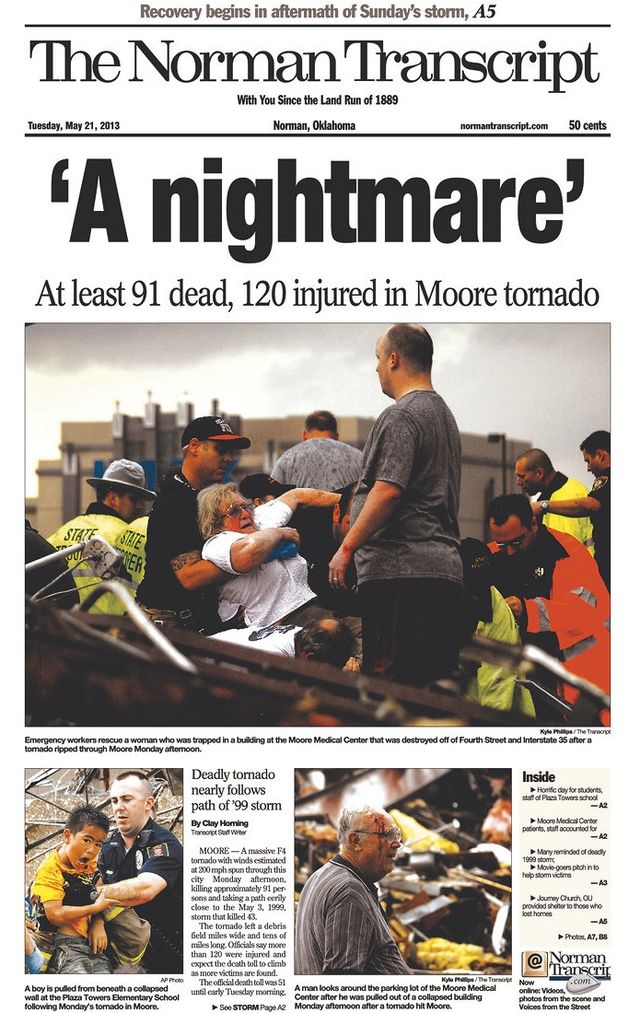
mooreOne of the powerful scenes after Hurricane Katrina was church organizations cutting their way through the roads with chainsaws so they could set up hot meal tents the very next day. Church responders have transformed into “well oiled machines” and are being praised by The Red Cross and federal agencies.

Read more on Churches Mobilize Professional Response for Oklahoma…

Writing for National Review Online, Rev. Robert A. Sirico offers three salient points about last night’s election:

1. Americans give signs of moving in a morally and politically more progressive direction, by which I mean that the appeal to the wisdom of past ages and tradition is simply not as compelling as it once was. People today, not all, but many, seem to want the trappings of the tradition (the white gown at the wedding), but not its obligations (chastity before it), thus indicating they would rather live off the legacy of the past than work to create a new and enduring legacy for the future.

Read more on Rev. Sirico: One Election Cannot Fix What Ails Us…

After 50-plus years of social unraveling, many reformers still see the “therapeutic model” as a cure for what ails American society. Or would a return to the classical virtues, as a means of healing first the person and then the culture, be the way of renewal? Rev. Gregory Jensen offers some thoughts in this week’s Acton Commentary (published Feb. 22), spurred by the reading of Charles Murray’s new book, Coming Apart: The State of White America, 1960–2010. The full text of his essay follows. Subscribe to the free, weekly Acton News & Commentary and other publications here.

Read more on Commentary: Human Excellence and the Moral Life…

Dr. Donald P. Condit, the author of the Acton monograph A Prescription for Health Care Reform, responds to the Obama administration’s mandate that most employers and insurers must provide contraceptives, sterilization, and abortifacient drugs free of charge. For more on this issue, see Acton’s resource on “Christians and Health Care.” Sign up for the free, weekly Acton News & Commentary newsletter here.

An Unconscionable Threat to Conscience

Read more on Commentary: An Unconscionable Threat to Conscience…

In The Christian Post, Napp Nazworth profiles Wisdom & Wonder: Common Grace in Science & Art. The article looks at the power the Abraham Kuyper translation project will have in transforming the way evangelicals engage the broader culture. Acton’s director of programs and international Stephen Grabill spoke with The Christian Post:

Read more on The Christian Post Highlights Wisdom & Wonder…

I wrote a piece on the Church’s response to disaster relief in the Spring issue of Religion & Liberty. The article for R&L is in part an extension of my commentary “Out of the Whirlwind: God’s Love and Christian Charity” after a tornado hit Joplin, Mo. in May.

Read more on Disaster Response and the Ministry of Presence…

John Armstrong
posted by on Monday, May 16, 2011

I have noted, in various blogs and comments, the value and importance of the Acton Institute for several years. I have been a blogger for Acton, attended a number of their events as a guest, and assisted them in several ways in public ventures. In general I have been an open supporter of Acton’s vision of freedom and virtue in public theology. Acton provides a unique partnership for ACT 3 since it is a think tank that includes wide religious participation (Catholic/Protestant/Orthodox/Jewish) while it embraces what I call missional-ecumenism as one of its core values. The specific mission of Acton Institute is “to promote a free and virtuous society characterized by individual liberty and sustained by religious principles.”

Read more on My New Role with Acton Institute…

In a follow up to Jordan Ballor’s commentary last week, “Christian Giving Begins with the Local Church,” here is a related excerpt from Darren Dochuk’s From Bible Belt to Sunbelt: Plain-Folk Religion, Grassroots Politics, and the rise of Evangelical Conservatism. I will review the new book published by Norton in the next issue of Religion & Liberty and for the PowerBlog. The excerpt from Dochuk’s book is an excellent reflection of not just how the local church can fulfill their Gospel mandate to help the poor, but also empower and build the community:

Read more on Empowerment through Giving within the Local Church…

Jordan J. Ballor
posted by on Monday, November 15, 2010

I just sent off a draft of a brief review of Carl Trueman‘s new book Republocrat: Confessions of a Liberal Conservative to appear in the next issue of Religion & Liberty. (You can get a complimentary subscription here).

Read more on Republocrat Review: A Sneak Peek…

John Couretas
posted by on Wednesday, June 23, 2010

This week’s Acton Commentary. Benjamin B. Phillips is Assistant Professor of Systematic Theology at Southwestern Baptist Theological Seminary, Houston Campus. This commentary was based on an article in the Journal of Markets & Morality (Vol. 12, No. 2).

+++++++++

Evangelicals and Global Warming

By Benjamin Phillips

Since 2005, evangelicals have divided into two roughly opposing camps over the question of anthropogenic global warming. Official statements of the Southern Baptist Convention through its resolution process, its Ethics and Religious Liberty Commission, and the Cornwall Alliance have typically rejected the theory of anthropogenic global warming and catastrophic climate change predictions. They assert that it is more likely that global warming will be moderate and have moderate or even helpful effects on the environment over all. They also argue that the reduction of carbon dioxide emissions is unlikely to have significant impact on global warming. These groups have focused primarily on the impact of climate-change policy on developing economies and the poor. On the other side, the Evangelical Environmental Network, through its Evangelical Climate Initiative and (as it seems) the SBECI have affirmed the existence and danger of anthropogenic global warming and have called for action to prevent it.

Despite conflict among evangelicals over the existence of anthropogenic global warming, there has been a great deal of consensus on the theological basis for addressing environmental degradation. Most evangelical statements appeal to the fact that God is the creator of the world as a basis for understanding the value of nonhuman creation, and many note that God is its owner. Virtually every evangelical statement on the environment and climate change acknowledges that God has commissioned humanity with the responsibility of stewardship/dominion over the earth and that the execution of this responsibility has been perverted by sin, with negative impact on the environment. Evangelicals have also, almost without exception, affirmed the responsibility of Christians to care for the poor as an important factor in considering environmental policy.

Read more on Evangelicals and Global Warming…

Acton PowerBlog RSS

Google Plus

Twitter Feed

Facebook Fan Page

Support the Acton Institute

The Acton Institute is funded through the generous contributions of individuals such as yourself. Learn more about how you can advance the cause of freedom and virtue.