Posts tagged with: gulag

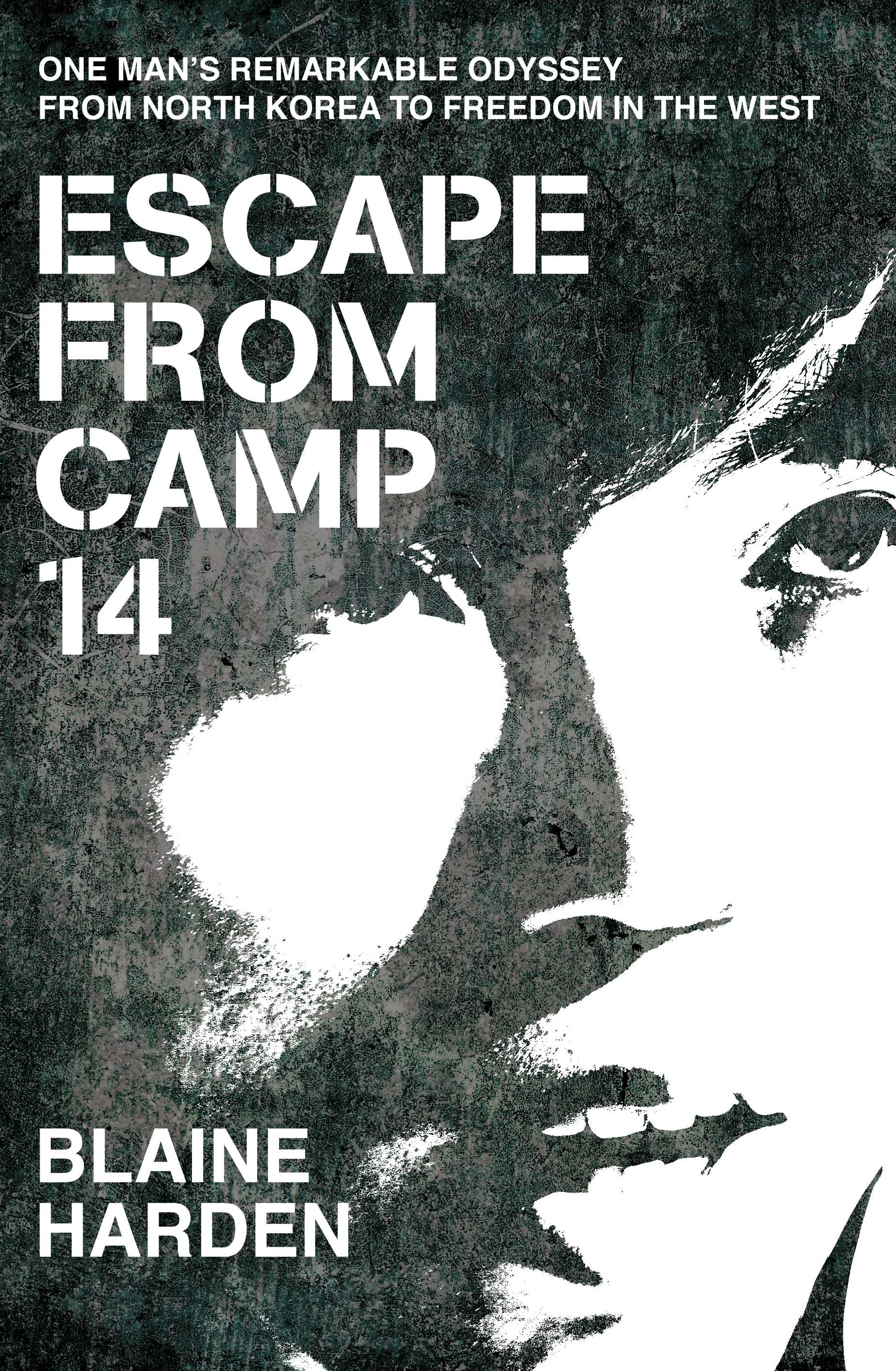
escape-from-camp-14-fc2“I escaped physically, I haven’t escaped psychologically,” says Shin Dong-hyuk. His remarkable journey out of a deadly North Korean prison to freedom is chronicled in Escape from Camp 14 by Blaine Harden. Shin didn’t escape for freedom. He had little knowledge of such a concept. He had heard that outside the prison, and especially outside North Korea, meat was available to eat.

Shin was born at Camp 14 in 1982 and was strictly forbidden to leave because of the sins of his family line against the state. His crime? Long before his birth, some of his relatives defected to South Korea. He was constantly told he could repent of his sins for hard labor and hunger. “Enemies of class, whoever they are, their seed must be eliminated through three generations,” declared Supreme Leader Kim Il Sung in 1972. Before his escape, Hardin summed up Shin’s prison experience:
Read more on One Man’s Great Escape from North Korea…

John Couretas
posted by on Friday, November 30, 2012

Visiting San Francisco’s Haight-Ashbury district in 1968, Tom Wolfe was struck by the way hippies there “sought nothing less than to sweep aside all codes and restraints of the past and start out from zero.” In his essay “The Great Relearning,” Wolfe connects this to Ken Kesey’s pilgrimage to Stonehenge, inspired by “the idea of returning to civilization’s point zero” and trying to start all over from scratch and do it better. Wolfe predicted that history will record that Haight-Ashbury period as “one of the most extraordinary religious experiments of all time.”

Read more on Back to Civilization’s Point Zero?…

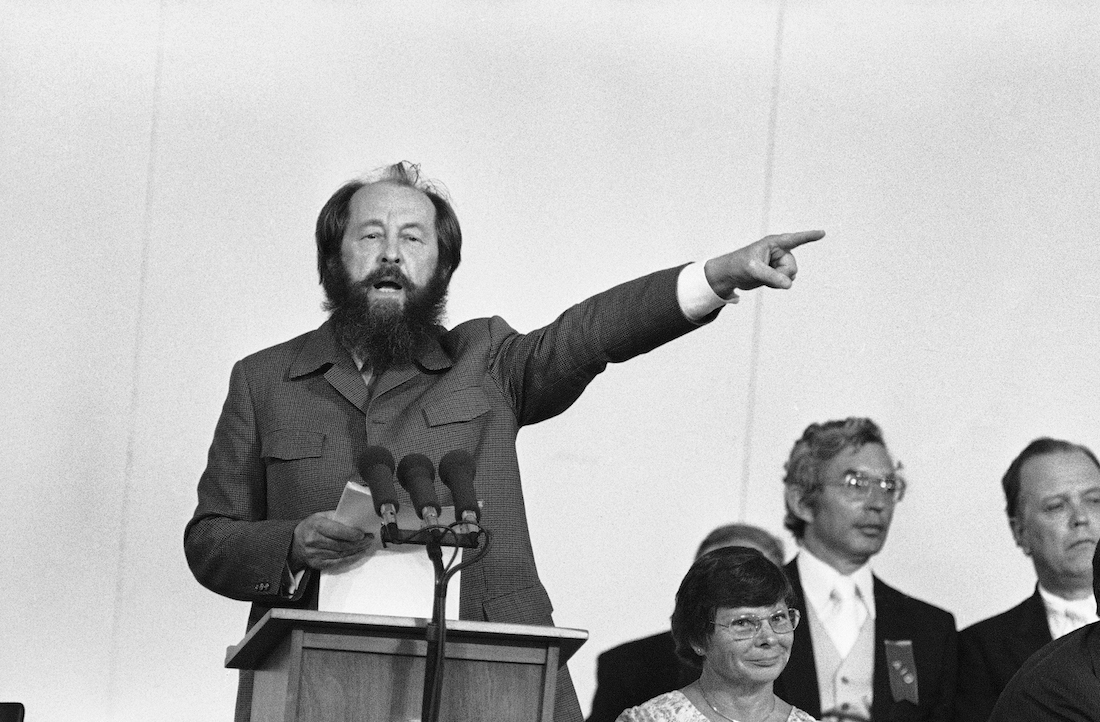
Pravmir.com, a Russian site, has published an English translation of an interview given by Archpriest Nikolai Chernyshev, who is identified as “the spiritual father of the Solzhenitsyn family during the final years of the writer’s life.” The interview touches on Aleksandr Solzenitsyn’s upbringing in a deeply religious Russian Orthodox family, his encounter with militant atheism ( … he joined neither the Young Pioneers nor the Komsomol [All-Union Leninist Young Communist League]. The Pioneers would tear off his baptismal cross, but he would put it back on every time). Fr. Chernyshev describes the writer’s later “period of torturous doubt, of rejection of his childhood faith, and of pain.” The priest talks of Solzhenitzyn’s return to the faith after his experience in the Gulag and how “he suffered and fretted about the Church being in a repressed state. For him this was open, obvious, naked, and painful.” Excerpt from the interview:

Read more on Solzhenitsyn: ‘There’s Plenty of Freedom, But Little Truth’…

John Couretas
posted by on Tuesday, May 10, 2011

A new online exhibit: European Memories of the Gulag. (HT: Instapundit/Claire Berlinski)

From 1939 to 1953, nearly one million people were deported to the Gulag from the European territories annexed by the USSR at the start of the Second World War and those that came under Soviet influence after the War: some to work camps but most as forced settlers in villages in Siberia and Central Asia. An international team of researchers has collected 160 statements from former deportees, photographs of their lives, documents from private and public archives and films. Many of these witnesses had never spoken out before.
In these statements and these documents, the Museum invites you to explore a neglected chapter of the history of Europe.

Read more on Stories from the Gulag…

Alexander Solzhenitsyn’s The Gulag Archipelago, banned in the Soviet Union until 1989, has been published in a new shorter, Russian-language edition aimed at schools. The book was included in the list of compulsory books in Russian schools only last year, according to a report in RIA Novosti.

Read more on Russian students get a new, shorter Gulag Archipelago. What about Americans?…

Open the books

Having recently finished reading Jean-François Revel’s Last Exit to Utopia – in which he excoriates leftist intellectuals for ignoring the crimes of communist totalitarianism and their efforts to resurrect the deadly ideology – and having just read a few more chapters of Solzhenitsyn’s Gulag Archipelago over lunch, it seems providential that I would stumble across this article at City Journal on the failure of researchers to seriously dig into the now-available archives of the Soviet Union:

Read more on Digging In to the Crimes of Communism…

Marc Vander Maas
posted by on Friday, April 30, 2010

U·to·pi·a [yoo-toh-pee-uh]- noun – an imagined place or state of things in which everything is perfect. The word was first used in the book Utopia (1516) by Sir Thomas More. The opposite of dystopia.
ORIGIN based on Greek ou not + tóp(os) a place

Last Exit to Utopia

Last Exit to Utopia by Jean-François Revel

Note, dear reader, the origin of the term “utopia”: the Greek root indicates that utopia is, literally, nowhere. It is not a place. It does not exist. Sir Thomas More, who first used the term, certainly never considered such a place to be realistically possible. And the truth of the matter is that anyone remotely acquainted with the reality of human nature and history must admit that we do not live in a perfect world, and that such a place would be impossible for fallen humanity to create.

Anyone, that is, besides leftist intellectuals and politicians, who continue to insist – against the overwhelming evidence of history – that socialism can work, that indeed it must work! They argue, in spite of all the plain evidence against them, that socialist solutions are more efficient and equitable than market solutions, and that the classical liberal system that has created the most vibrant societies and powerful economies in world history should be at the very least reined in and subjected to strict scrutiny, and at most outright replaced by a “more humane” socialist system.

Jean-François Revel was a French intellectual, a member of the Académie française, and one of the greatest French political philosophers of the 20th century, at least in the seemingly small branch of 20th century French political philosophy that wasn’t completely enamored of totalitarian schemes. Prior to his death in 2006, he penned a book called Le Grande Parade, which has now been translated into English and re-titled Last Exit to Utopia, in which he exposes the intellectual and moral failure of leftist intellectuals who have served as apologists for the brutal communist regimes that brought misery and death to millions in the last century, and examines the project that was undertaken by the left after the fall of communism to rehabilitate Marxist and socialist ideas.

Revel was no stranger to this type of clear thinking; indeed, as early as 1970 (in an earlier work, Without Marx or Jesus) he was willing to completely dismiss the argument that Stalin had hijacked and warped the course of Lenin’s revolution by noting that “…Neither Lenin, if he had lived, nor Trotsky, if he had remained in power, would have acted any differently from Stalin.” He understood that the problems in socialist systems were not caused by people corrupting the system, but stemmed from the design of the system itself. He restates that 1970 argument in 2000 – this time with the benefit of retrospect – in Utopia, describing the state of affairs after the fall of the Berlin Wall in 1989: Read more on Last Exit To Utopia…

'Waiting to be shot' by Nicolai Getman

‘Waiting to be shot’ by Nikolai Getman

I linked Daniel Crandall’s fine commentary on the paucity of films devoted to the Gulag in this week’s Acton News & Commentary (sign up here). But do to an, ahem, editing error the link did not send readers to The Gulag Lives On – But Not in Our Culture on OrthodoxyToday.org. Crandall also discusses the paintings of Nikolai
Getman, whose work based on Gulag life is on display at the Heritage Foundation through Dec. 10. As Heritage explains it, “Getman began painting the scenes in secret once freed in 1953 after eight years’ forced labor in Siberia and Kolyma. His own crime? He’d been in the company of a fellow artist who had mocked Stalin with a tiny drawing.” Crandall asks an important question in his article:

Read more on The Gulag Lives On – But Not in Our Culture…

John Couretas
posted by on Monday, August 4, 2008
Solzhenitsyn

“During all the years until 1961, not only was I convinced that I should never see a single line of mine in print in my lifetime, but, also, I scarcely dared allow any of my close acquaintances to read anything I had written because I feared that this would become known. Finally, at the age of 42, this secret authorship began to wear me down. The most difficult thing of all to bear was that I could not get my works judged by people with literary training. In 1961, after the 22nd Congress of the U.S.S.R. Communist Party and Tvardovsky’s speech at this, I decided to emerge and to offer One Day in the Life of Ivan Denisovich.”

Read more on Alexander Solzhenitsyn (1918-2008)…

Acton PowerBlog RSS

Google Plus

Twitter Feed

Facebook Fan Page

Support the Acton Institute

The Acton Institute is funded through the generous contributions of individuals such as yourself. Learn more about how you can advance the cause of freedom and virtue.