Posts tagged with: human dignity

International Women’s Day has been celebrated on March 8 since 1911, when Clara Zetkin, a member of the Social Democratic Party in Germany, proposed the yearly event that has its roots in women’s suffrage. It is good to remember that women have not always enjoyed the right to vote, the right to work in a safe environment and to earn a fair wage. Indeed, many women around the world still do not enjoy such basic rights. However, the website promoting International Women’s Day is disheartening, in that it chooses to focus on controversial – and sometimes tasteless – issues.

iwd_squareFor instance, one video highlights women staging a “topless demonstration” (with full frontal nudity) in Istanbul to protest domestic violence; it’s unclear how nudity helps protect women against violence. Another video uses a supermodel in a piece entitled “Smart is the New Sexy”. However, the video equates attractiveness with doing something about global poverty. Sexy is still sexy, and smart is about being hip and beautiful, apparently. Finally, there is a video from the Council of Commonwealth Societies called ‘Women as Agents of Change”.  This video highlights the importance of a girl’s health, education, opportunities and financial freedom. Read more on International Women’s Day: Please Stop “Helping” Us So Much…

You might get goose bumps watching this fiery speech by Fr. Andrew Kemberling. After all, it is not every day we hear a wholesale condemnation socialism from a priest on the “pulpit” of a conservative political rally!

This vociferous pastor from St. Thomas More parish in Centennial, Colo., delivered an impassioned address last May. It may be old news, but the video has gained enormous popularity and even gone viral (over 1.3 million views) just one month before the U.S. presidential elections.

As the free market vs. socialism politicking are growing to a climax, surely more Christian believers like Fr. Kemberling are declaring they too  have “earned a free pass” to engage in this heated debate to express  their strong convictions against centrally planned, godless political regimes. Read more on Video: Colorado Priest Condemns Socialism at GOP Assembly…

Jonathan Witt
posted by on Wednesday, December 21, 2011

My recent piece in The American Spectator took the left to task for its misuse of the terms justice and social justice. The piece was more than a debate over semantics. In it I noted that Sojourners and its CEO, Jim Wallis, continue to promote well-intended but failed strategies that actually hurt the social and economic well-being of poor communities. I also called on everyone with a heart for the poor to set aside a top-down model of charity that “has trapped so many humans in a vicious cycle of paternalism and dependency” and instead to focus “on cultivating political and economic freedom for the world’s poor.” Sojourners’ Tim King responded here and then emailed me to ask for my thoughts on his response. I’ll start by emphasizing a few areas of agreement, adding a caveat here and there so as not to overstate the areas of overlap, and then I’ll move on to some areas of difference.

Read more on The Social Muddle at Sojourners…

Friedrich Hayek called it a weasel word. The American Spectator has my new essay on it here.

More on social justice as it appears in Catholic social teaching here. And more on social business here.

Read more on Social Business, Social Gospel, Social Justice…

Paul Krugman made the mistake of over-sharing this past weekend when he told CNN’s Fareed Zakaria he thinks that the United States economy would benefit from a military build-up to fight made-up space aliens. He’s been defended as being fed up with Republican obstructionism, being desperate to make a point, or even being wholly and completely correct. He’s entirely wrong though, and his thinking (what there is of it) is an example of the kind of depersonalized economics that has cost this country so much.

Read more on Krugman: Aliens Worth More to Economy than Men and Women (VIDEO)…

The budget proposed by House Republicans has lead to a heated debate; one key facet being whether funding should be cut for programs that benefit the poor and vulnerable. Critics claim the House Republicans’ proposed budget violates Catholic social teaching (click here to read the critics’ open letter to Speaker Boehner). Rev. Robert A. Sirico’s first response to Boehner’s critics appeared in NRO. In this week’s commentary Rev. Sirico expands upon his first response and articulates how Catholics can disagree on how to assist the poor and vulnerable. The article originally appeared in Crisis Magazine.

Read more on Rev. Sirico: Not Whether to Help the Poor, But How…

Ray Nothstine
posted by on Tuesday, February 15, 2011

Reagan at Danilov Monastery

I point you to Paul Kengor’s insightful 2008 piece on Ronald Reagan’s 1988 summit to Moscow in Christianity Today because it is directly related to this Thursday’s Acton on Tap. I will spend some time discussing the Moscow Summit and Reagan’s revolutionary comments at Spaso House, Danilov Monastery, and Moscow State University. Kengor notes:

Read more on Mission to Moscow…

With health care moving back to center stage in Washington, we’re publishing Dr. Donald Condit’s Acton monograph A Prescription for Health Care Reform as a free eBook readable in a variety of formats. This excellent work continues to be available for $6 (paperback) in the Acton Bookshoppe.

Read more on Free eBook: A Prescription for Health Care Reform…

From the Jan. 5 Acton News & Commentary. This is an edited excerpt of “Health-Care Counter-Reform,” a longer piece Dr. Condit wrote for the November 2010 issue of the Linacre Quarterly, published by the Catholic Medical Association. For more on this important issue, see the Acton special report on Christians and Health Care. Dr. Condit is also the author of the 2009 Acton monograph, A Prescription for Health Care Reform, available in the Book Shoppe.

Obamacare and the Threat to Human Dignity

By Dr. Donald P. Condit

Since President Obama signed the Patient Protection Act into law in March 2010, the acrimonious debate on this far-reaching legislation has persisted. For many, the concerns over the Obama administration’s health care reform effort are based on both moral and fiscal grounds. Now, with House Republicans scheduling a vote to repeal “Obamacare” in the days ahead, the debate is once again ratcheting up.

Perceived threats to the sanctity of life have been at the heart of moral objections to the new law. Despite a March 2010 executive order elaborating the Patient Protection Act’s “Consistency with Longstanding Restrictions on the Use of Federal Funds for Abortion,” many pro-life advocates fear a judicial order could reverse long-standing Hyde amendment restrictions on the use of federal tax dollars for abortion. Impending Medicare insolvency and the Patient Protection Act’s establishment of an “independent payment advisory board” to address treatment effectiveness and cost suggest bureaucratic restrictions on the horizon for medical care of the elderly and disabled.

The objections made on fiscal grounds are serious. Prior to the 2008 presidential election, Barack Obama voiced concern for 47 million Americans without health insurance. More recently, supporters of this legislation focused on 32 million Americans, with 15 million immigrants and others left out of the equation, yet still requiring care in United States emergency rooms. The Patient Protection Act increases eligibility for Medicaid recipients, yet state budgets are severely strained with their current underfunded medical obligations. Moreover, doctors struggle to provide health-care access to Medicaid patients when reimbursed below the overhead costs of delivering care.

Who Should Pay?

The perception among consumers of third-party responsibility for health, including payment for health-care resource consumption, is the major factor for unsustainable escalation of medical spending in the United States. Yet the Patient Protection Act augments third-party authority and threatens doctor-patient relationship autonomy, by increasing responsibility of government and employers for health care. Patients and physicians will face increasing involvement of third parties in decision making in exam rooms and at the bedside. Read more on Obamacare and the Threat to Human Dignity…

Distributed today on Acton News & Commentary:

Human Dignity, Dark Skin and Negro Dialect

by Anthony B. Bradley Ph.D.

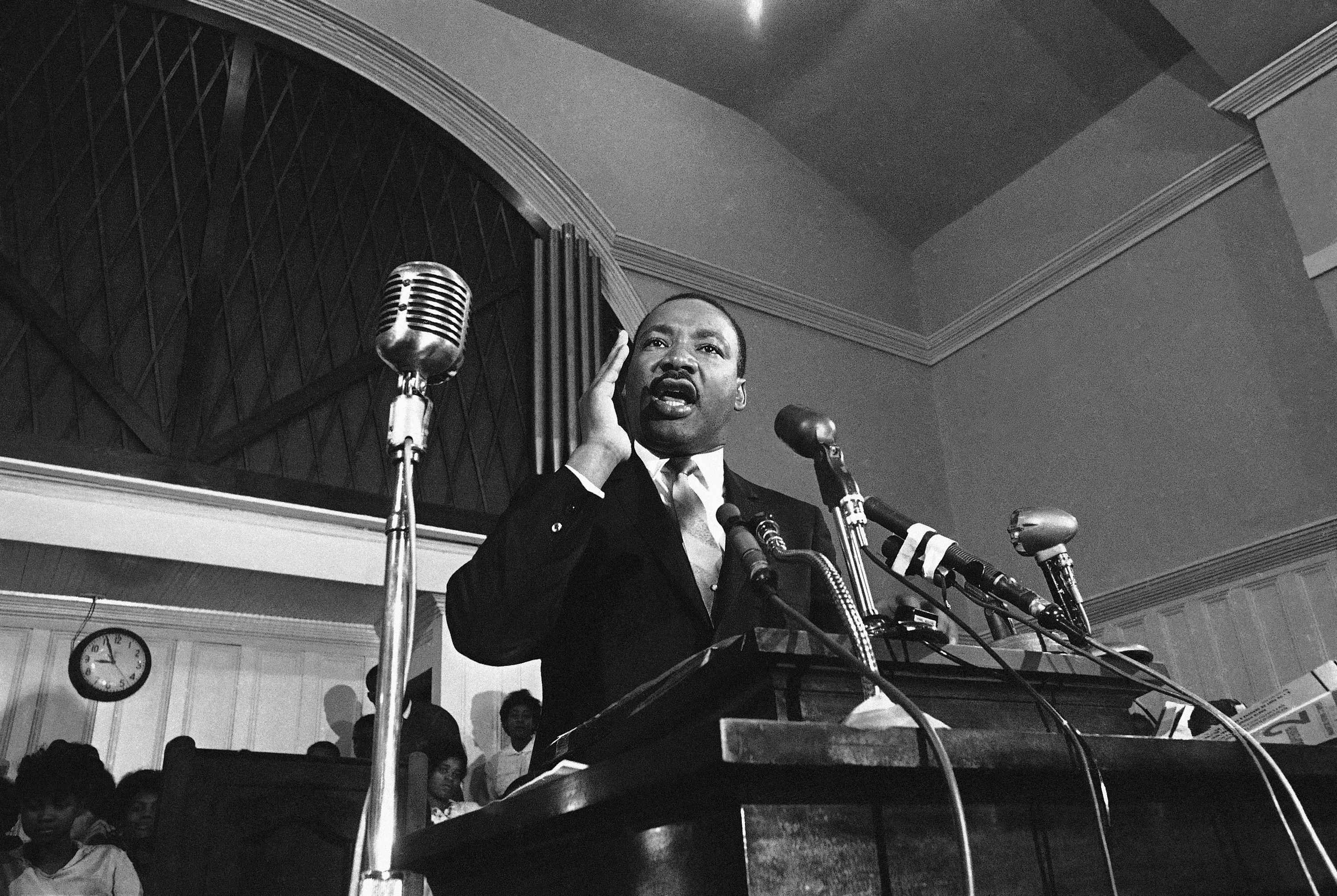
Black History Month is a time not only to honor our past but also to survey the progress yet to be made. Why does the black underclass continue to struggle so many years after the civil-rights movement? Martin Luther King dreamt about an America where women and men are evaluated on the basis of character rather than skin color. The fight for equal dignity, however, was derailed by a quest for political clout and “bling.” The goal of equality measured by outcomes, sought by means of government-directed racial inclusion programs, overshadowed the more challenging campaign for true solidarity based on widespread recognition of the inherent dignity of all people.

Read more on Acton Commentary: Human Dignity, Dark Skin and Negro Dialect…

Acton PowerBlog RSS

Google Plus

Twitter Feed

Facebook Fan Page

Support the Acton Institute

The Acton Institute is funded through the generous contributions of individuals such as yourself. Learn more about how you can advance the cause of freedom and virtue.