Posts tagged with: ludwig von mises

Joe Carter
posted by on Thursday, October 11, 2012

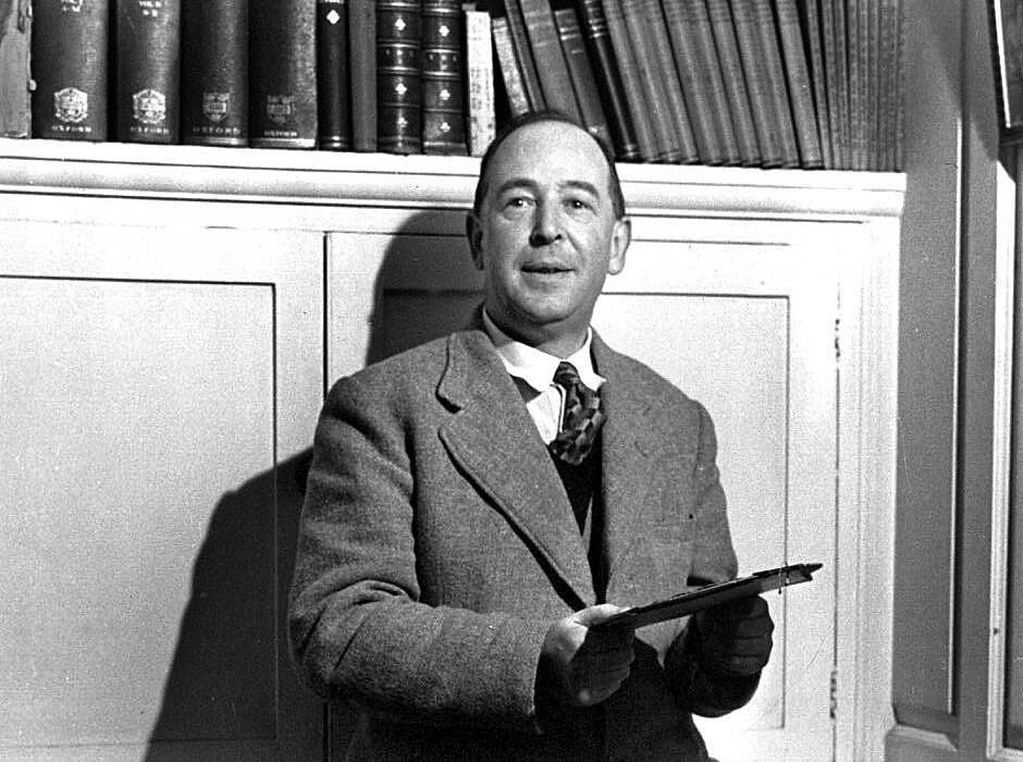
C.S. Lewis may not have written specifically about economics, but as Harold B. Jones Jr. explains, there’s reason to consider him a defender of the free market:

. . . C. S. Lewis had much in common with the great free-market thinkers of his time. He is discovered on careful examination to have been writing about many of the same issues as Ludwig von Mises and Friedrich Hayek and on these issues to have been in perfect agreement with them. The dates are worth considering. Bureaucracy, one of Mises’s critiques of governmental economic intervention, came out in 1944. Hayek’s The Road to Serfdom came out the same year. Lewis had released The Abolition of Man only a year before, and in the year that followed his That Hideous Strength made its debut. All these books were written to defend the idea of the individual human being as the locus of rational choice and moral responsibility. Mises and Hayek wrote as economists and Lewis as a lay theologian, but all three wrote to challenge the assault on human nature in the name of a false ideal.

Read more on C. S. Lewis and the Free Market…

Over the last several years I find myself more and more being drawn into conversation about religion—specifically, Orthodox Christianity—and economics. Originally, my interest in the economic side of the conversation was minimal. Embarrassing though it is to say now, I only took one economics class in college and while I got a “B” I was an indifferent student of the subject.

Read more on Review: AEI’s Common Sense Concept Series…

Jonathan Witt
posted by on Monday, December 7, 2009

My essay in today’s American Spectator Online looks at why Ben Bernanke should not be confirmed to a second term as Chairman of the Federal Reserve:

Two planks in Bernanke’s recovery strategy: Expand the money supply like a banana republic dictator and throw sackfuls of cash at failed companies with a proven track record of mismanaging their assets. The justification? According to the late John Maynard Keynes, this is supposed to restore the “animal spirits” of the cowed consumer, the benighted creature who foolishly imagines that after a period of prodigality and mismanagement, maybe a country should rediscover its inner Dave Ramsey.

Read more on Bernanke Versus the Austrians…

John Couretas
posted by on Monday, October 27, 2008

The famous Austrian economist, Joseph Schumpeter, despaired for the future of the free market system. The reason for this despair was that the excess wealth of the system would create educated folks who would turn on the very system that created them. Their education would make them into anti-capitalist ideologues, who would then kill the goose that laid the golden egg. He did not think that those who participated in the creation of such enormous wealth would be in any position to fight back, and this for two reasons: firstly, business people do not tend to be men of letters, so they are unable to mount arguments defending the system; secondly, the job of the business executive is the survival of the company, and thus, he will concentrate on those things required to weather the storm, not be controversial.

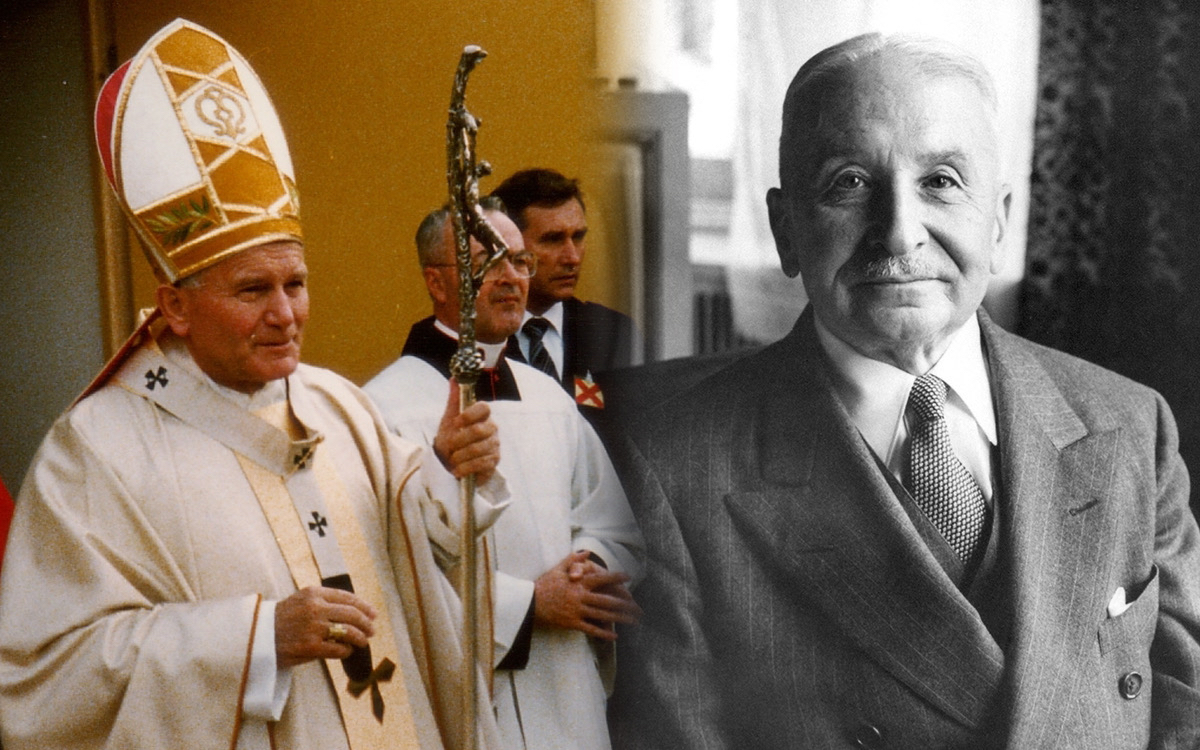
The man who is probably the most famous Austrian economist, Ludwig von Mises, despaired for the future of the free market system due to envy. Various sectors of society, academic, non-productive, uneducated, etc., would envy the wealth of the producers in society, and end up by finding means to take away that wealth and give it to the lesser productive people, despite the fact that they did not earn it, and therefore, are not entitled to it.

Our present political situation has a combination of both of these views. Both presidential candidates are in favor of redistribution of wealth, albeit one is more open about it. And very few business people are saying “no!” to any of it with a few exceptions, such as the president of BB&T Bank, who wrote an open letter to Congress asking why his totally solvent bank should be punished for the stupidity of the others.

But there is another culprit in this maelstrom. This culprit is the business person. Why? With tongue-in-cheek apologies to neo-classical (mathematical) economic theory, the purpose of a company is not to make a profit. As John Paul II said in Centesimus Annus, a profit is a sign of the health of a company, and therefore is good and necessary. But anyone who has taken a management course knows that the purpose of the company, aside from producing what the customers want, is to increase the wealth of the stockholders. This is different than making a profit, although profit is an integral part of it. Wealth is different than profit. Profit is a short run measurement of the short run health of the company. Wealth, by its very nature is long run. Profit appears on the financial statements of a company in mere money terms, and the accountants who produce those statements do not even take inflation into account. So a company could have an increase in profit, but not an increase in items sold, merely because they had to raise prices to accommodate the fall in the value of the dollar. But executives today are a slave to the profit line in the financial statements. They have a need to impress their boards and stockholders now by sacrificing the long term growth of the enterprise. Read more on Saving the Free Market…

Acton PowerBlog RSS

Google Plus

Twitter Feed

Facebook Fan Page

Support the Acton Institute

The Acton Institute is funded through the generous contributions of individuals such as yourself. Learn more about how you can advance the cause of freedom and virtue.