Posts tagged with: market economy and ethics

Beginning today, the conference “Religion and Liberty — A Match Made in Heaven?” gets underway in Jerusalem. Sponsored by the Jerusalem Institute for Market Studies (JIMS), the Acton Institute and others, the event asks questions such as, “Is capitalism not only efficient but also moral?” In conjunction with this May 20-24 conference, Acton is offering its two Jewish monographs through Amazon Kindle at no charge.

Read more on Free Acton Institute eBooks on Judaism, Law and the Market Economy (May 20-24)…

In the Grand Rapids Press, reporter Ann Byle interviews Acton’s Michael Miller about a live, national webcast on Sept. 24 of the Colson Center’s “Doing the Right Thing: An Exploration of Ethics.” Byle notes that the webcast “features a live panel discussion with [Chuck] Colson, experts Del Tackett, Robert George, John Stone-street and host Eric Metaxas. Grand Rapids-based Acton Institute’s Michael Miller also will participate as a panelist, thanks to his work as a research fellow and expert on the intersection of business and ethics.” Miller says:

Read more on Webcast: Acton’s Michael Miller in Colson’s ‘Doing the Right Thing’…

John Couretas
posted by on Wednesday, March 9, 2011

Here’s today’s offering from Jim Wallis’ Rediscovering Values for Lent on the Sojourners website:

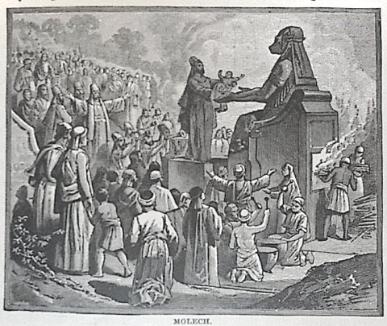
Today, instead of statues, we have hedge funds, mortgage-backed securities, 401(k)s, and mutual funds. We place blind faith in the hope that the stock indexes will just keep rising and real estate prices keep climbing. Market mechanisms were supposed to distribute risk so well that those who were reckless would never see the consequences of their actions. Trust, security, and hope in the future were all as close to us as the nearest financial planner’s office. Life and the world around us could all be explained with just the right market lens. These idols were supposed to make us happy and secure and provide for all our needs. Those who manage them became the leaders to whom we looked, not just for financial leadership, but direction for our entire lives. That is idolatry. (page 29).

Read more on Does your 401K make you an idolator?…

John Couretas
posted by on Monday, April 5, 2010

First Principles, the excellent Web-based resource from the Intercollegiate Studies Institute, has posted another “classic” from its extensive archive of journal articles, this one by Wilhelm Roepke. I’m snipping a kernel from “The Economic Necessity of Freedom” (Modern Age, Summer 1959) because it so succinctly and powerfully sums up why a moral framework — and our “highest values” — are necessary for a market economy that is not only efficient, but humane. These values flow out of the “classic-Christian heritage of Europe” and are rooted, for Roepke, in an orthodox Christian anthropology.

Read more on Roepke: Beyond Technique…

Samuel Gregg
posted by on Monday, November 16, 2009

How do we restore confidence in free markets? Formulate a robust explanation of their moral value. Read Economic Liberalism and its Discontents on Public Discourse.

In his recent book The Creation and Destruction of Value, Princeton University’s Harold James observes that the 2008 financial crisis resulted in more than the devastation of economic value. It also facilitated a collapse of values in the sense of people’s faith in particular ideas, institutions, and practices. Among these, few would question that economic Liberalism’s credibility was significantly undermined.

Read more on Economic Liberalism and its Discontents…

Stephen Grabill
posted by on Thursday, November 5, 2009

This week’s Acton Commentary:

Does the market inspire people to greater practical virtue, or does it eviscerate what little virtue any of us have?

Far from draining moral goodness out of us—as many think—the free market serves as a “school of the practical virtues.” Rather than elevating greed and self-sufficiency, the market fosters interdependence and cooperation. Its rewards do not go to those who are the most isolated, self-absorbed, or cut off from society, but to those who sustain mutually prosperous relationships with others.

Adam Smith made a striking observation more than two hundred years ago in his treatise, The Theory of Moral Sentiments. In a commercial society, he wrote, “every man becomes in some sense a merchant.” If Smith is right, what does that imply for the development of character in society? Is the market economy more likely to produce a Bernie Madoff or a Dave Ramsey? Does the market tend to erode character traits such as honesty, loyalty, courage, and the responsible stewardship of resources? Read more on The Market, School of Virtue…

Rev. Robert Sirico
posted by on Monday, July 6, 2009

My commentary on the forthcoming social encyclical was published on National Review Online. Here’s the complete text:

On Tuesday, Pope Benedict XVI will release his first social encyclical, Caritas in Veritate. The pre-release buzz from the Catholic Left on each of his two previous encyclicals has so far proven wrong each time, so the rule should be to wait and see what the pope will actually say.

Each time, with previous encyclicals, we have been told that the pope is preparing to lambaste capitalism and call for state measures to heavily regulate it with an eye to redistributing wealth, cleaning up the environment, controlling consumption, etc. Each time, the final text has demonstrated that the pope’s conversion to progressivist causes has been greatly exaggerated. Invariably, his arguments have been highly sophisticated and have defied easy political categorization.

In advance of Caritas in Veritate, Catholic “progressives” are working themselves into a frenzy of predictions, recommendations, and anathemas — and not one of them, to my knowledge, has seen even an early draft of the encyclical which has been two years in the making.

Will the document draw attention to the weaknesses of Western-style capitalist systems? One hopes so. We might expect the pope to call on market forces to be regulated by moral concerns, within a strong juridical framework, and an exogenous apparatus of standards to curb excesses.

But here is the operative question: In what sense would such a call be a blow against the idea of free economic institutions? The short answer is that it will not be.

There are few advocates of market economics who advocate a complete lack of regulation rightly understood. Every transaction in the marketplace is in fact regulated by contract law, reputation, industry standards, competition, certification and monitoring, and profit and loss systems that reward prudence and punish excess over the long term.

Do these need strengthening? Certainly, and it should be noted that a main force for weakening them is not the market as such, but partisan interventions in the market. Read more on NRO: The Divine Economy…

John Couretas
posted by on Wednesday, November 26, 2008

Following up on our coverage of Pope Benedict’s economic “prophecy,” here’s a snip from yesterday’s “Papal Bullishness” editorial in Investor’s Business Daily. Read then-Cardinal Ratzinger’s 1985 article “Market Economy and Ethics” here.

Read more on IBD: Papal Bullishness…

Jordan J. Ballor
posted by on Thursday, November 20, 2008

Linked yesterday on the Drudge Report and picked up by news outlets all over the world is a brief Bloomberg report on a statement from the Italian Finance Minister Giulio Tremonti. Tremonti attributed to Pope Benedict XVI a “prophecy” dating from over twenty years ago concerning the current global financial meltdown.

Read more on The Pope’s Economic ‘Prophecy’…

Acton PowerBlog RSS

Google Plus

Twitter Feed

Facebook Fan Page

Support the Acton Institute

The Acton Institute is funded through the generous contributions of individuals such as yourself. Learn more about how you can advance the cause of freedom and virtue.