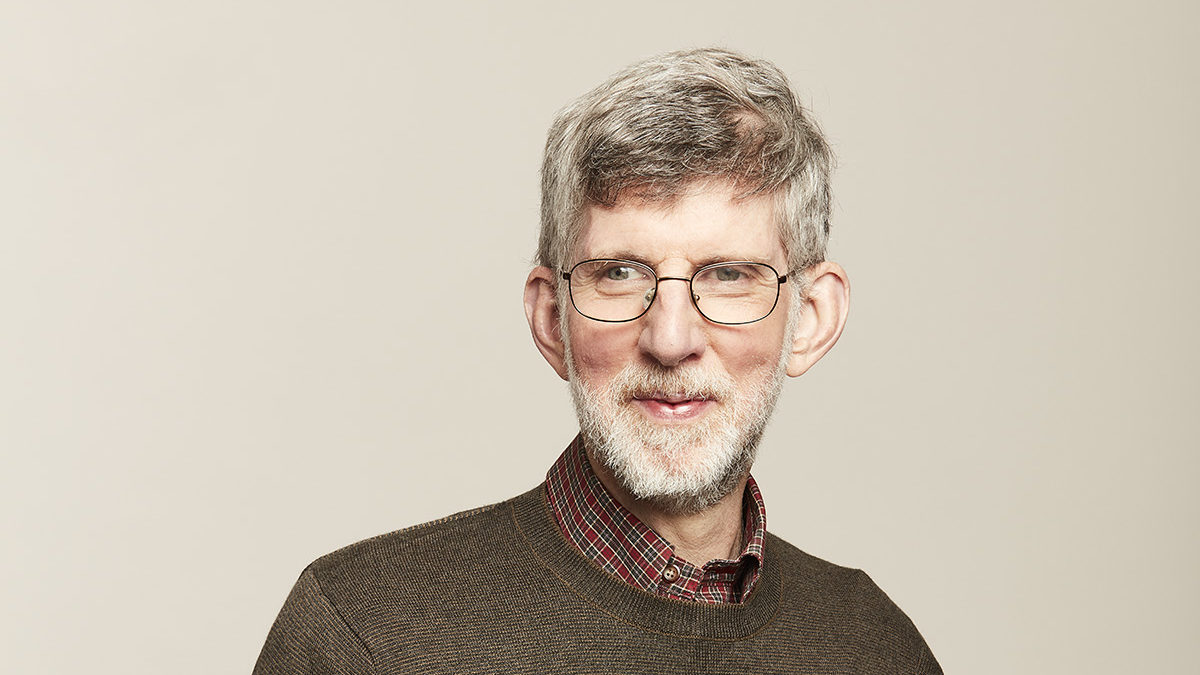
Posts tagged with: marvin olasky

Marvin Olasky, editor in chief of WORLD Magazine, just listed Samuel Gregg’s Becoming Europe: Economic Decline, Culture, and How America Can Avoid a European Future in his mid-Winter roundup of books to read. He says:

Read more on Review: Marvin Olasky on Samuel Gregg’s ‘Becoming Europe’…

Marvin Olasky, a Senior Fellow in Acton’s Research Department, has an article in World Magazine regarding evangelism and effective economic development in Ghana. There is an effort to teach strategic economic skills to budding entrepreneurs incorporating a wholistic approach, combining not only economic lessons, but spiritual ones as well.

Read more on ‘We have no excuse for our poverty. We will not advance without integrity and compassion.’…

Jordan J. Ballor
posted by on Thursday, May 3, 2012

Dr. Kuypers zorg voor de kleine luyden

Albert Hahn: Dr. Kuyper’s care for the little people (1905)

In yesterday’s post I highlighted a pair of articles that cover the transition over the last 120 years or so in the Netherlands from an emphasis on private charitable giving to reliance upon the welfare state. In some ways this story mirrors a similar transformation in American society as described by Marvin Olasky in his landmark book, The Tragedy of American Compassion.

Olasky’s work does double-duty, however, not only chronicling this transition but cogently arguing the superiority of voluntary aid and charity, which can effectively address both spiritual as well as material aspects of poverty.

In the special issue of the Journal of Markets & Morality on “Modern Christian Social Thought,” we also find a wonderful resource on this topic in the form of Abraham Kuyper’s reflection from 1895 on the relationship of Christ and the gospel to material concerns, “Christ and the Needy.”
Read more on The Tragedy of Dutch Compassion…

Joe Carter
posted by on Monday, February 20, 2012

Gleaning is the traditional Biblical practice of gathering crops that would otherwise be left in the fields to rot, or be plowed under after harvest. The biblical mandate  for the practice comes from Deuteronomy 24:19,

When you reap your harvest in your field and forget a sheaf in the field, you shall not go back to get it. It shall be for the sojourner, the fatherless, and the widow, that the LORD your God may bless you in all the work of your hands.

Gleaning provided the poor with a way to use their own labor to provide for their needs. For us today, the practice provides a useful Biblical model for how we can help others to help themselves. “Those with wealth are to provide opportunities for the poor to rise out of poverty,” writes Marvin Olasky, in Renewing American Compassion, “the typical starting point in the Old Testament was gleaning.”

Read more on Gleaner Technology…

Jonathan Witt
posted by on Wednesday, December 21, 2011

My recent piece in The American Spectator took the left to task for its misuse of the terms justice and social justice. The piece was more than a debate over semantics. In it I noted that Sojourners and its CEO, Jim Wallis, continue to promote well-intended but failed strategies that actually hurt the social and economic well-being of poor communities. I also called on everyone with a heart for the poor to set aside a top-down model of charity that “has trapped so many humans in a vicious cycle of paternalism and dependency” and instead to focus “on cultivating political and economic freedom for the world’s poor.” Sojourners’ Tim King responded here and then emailed me to ask for my thoughts on his response. I’ll start by emphasizing a few areas of agreement, adding a caveat here and there so as not to overstate the areas of overlap, and then I’ll move on to some areas of difference.

Read more on The Social Muddle at Sojourners…

Over at Patheos’ Black, White and Gray blog, where a group of Christian sociologists “share our observations and research and reflect on its meaning for Christian faith and practice,” Margarita A. Mooney writes about “Faith-Based Social Services: An Essential Part of American Civil Society.”

Read more on True Philanthropy and Faith-Based Initiatives…

Kenneth Spence
posted by on Tuesday, September 6, 2011

Yesterday, five leading Republican candidates participated in the Palmetto Freedom Forum, a serious debate on constitutional principles. Mitt Romney, Michelle Bachmann, Newt Gingrich, Ron Paul, and Herman Cain answered questions from Tea Party congressmen Jim DeMint and Steve King, and Princeton professor Robert P. George.

Read more on Gregg’s Take on Labor Day Debate…

The green movement has had a dramatic, long lasting impact on public policy, individuals, and even religion. But many people of faith have criticized supporters of the green movement, equating  its strong followers with those who practice a pagan religion in support of Mother Nature.

Read more on Is the Green Movement Problematic for Christians?…

Jordan J. Ballor
posted by on Wednesday, March 2, 2011

Acton senior fellow Marvin Olasky has the cover story for the upcoming issue of WORLD magazine, and it’s worth reading in full, “The revival of localism.”

Olasky’s basic narrative focuses on “young men and women who understand that they are Christian pilgrims in this world—but they expect to stay in one place, making friends and being of service, unless and until God moves them on.”

Read more on Olasky on the New-Old Local…

John Couretas
posted by on Monday, January 31, 2011

Peter Wehner on Commentary Magazine’s Contentions blog looks at the recent joint statement on civility from Jim Wallis and Chuck Colson:

… what is worth noting, I think, is that Wallis (as opposed to Colson) has repeatedly violated his commitment to civility. For example, in 2007, Wallis said: “I believe that Dick Cheney is a liar; that Donald Rumsfeld is also a liar; and that George W. Bush was, and is, clueless about how to be the president of the United States. They have shamed our beloved nation in the world by this [Iraq] war and the shameful way they have fought it.”

Read more on The Amnesiac Civility of Jim Wallis…

Acton PowerBlog RSS

Google Plus

Twitter Feed

Facebook Fan Page

Support the Acton Institute

The Acton Institute is funded through the generous contributions of individuals such as yourself. Learn more about how you can advance the cause of freedom and virtue.