Posts tagged with: poor

Now meeting the goal of cutting our dependence depends largely on two things: first, finding and producing more oil at home; second, reducing our overall dependence on oil with cleaner alternative fuels and greater efficiency. This begins by continuing to increase America’s oil supply.

These were the words spoken by President Obama on March 30 in an address he gave at Georgetown University on America’s energy security.  The president also stated in the same speech that “one big area of concern has been the cost and security of our energy,” and “ … our best opportunities to enhance our energy security can be found in our own backyard … ”

Read more on President Obama’s Energy Doublespeak…

Below is the full-length version of “The Rich Young Man: The Law Versus Privilege,” an essay published in the winter 2011 Religion & Liberty. John Kelly’s essay was shortened because of space limitations for the print issue. He was passionate about sharing the full version, which he edited himself for readers of the PowerBlog. Mr. Kelly, a financial advisor, also authored a piece in 2004 for Religion & Liberty titled “The Tithe: Land Rent to God.”

– — – — – –

THE RICH YOUNG MAN: THE LAW VERSUS PRIVILEGE

by John Kelly

As Jesus conducted his public ministry, he drew considerable crowds. Within the throngs were, of course, the peasants of the neighborhood, along with longer-term disciples. There were many who wished to see miracles, many who wished to hear his sayings of peace, love, hope and promise. There were those who wanted reinforcement of the Law and those who wished to see some of the Law abandoned. And within all these groups were many who were troubled by personal doubt.

Jesus spoke with these people, engaging them, answering their questions, asking them questions, all the while proclaiming the authority and the efficacy of the Law. He said, “Do not imagine that I have come to abolish the Law or the Prophets. I have come not to abolish – but to complete them.” He then goes on – he’s trying to make sure his listeners understand: “In truth I tell you, till heaven and earth disappear, not one dot, not one little stroke, is to disappear from the Law until all its purpose is achieved.” (Matthew 5:17-18 – NJB)

Some of Jesus’ most engaging images come from these conversations. Rich and poor, titled and powerless, legalists and apostates, disciples and strangers all had encounters with Jesus that fleshed out for them his view of the Law. However, our lack of knowledge regarding the economic, political and cultural environment in which Jesus lived and preached sometimes hampers our understanding of his message.

One of the more famous of these encounters was with the rich young man. This story is found, in almost identical versions, at Matthew 19:16-22, Mark 10:17-22 and Luke 18:18-23. He approached Jesus and asked what was necessary to be saved. “Good Master, what must I do to inherit eternal life?” Jesus replied that the young man should keep the commandments. “I have kept all these,” stated the rich young man, “What more do I need to do?” Jesus said to him, “If you wish to be perfect, go and sell your possessions and give the money to the poor … then come, follow me.” This was too much for the young man. Scripture says that he “went away sad, for he was a man of great wealth.”

This story seems too hard for most of us. What is fundamentally wrong with being rich? Preachers try to make sense of this passage by assuming that the rich young man was too materialistic, and that the story is a warning to us about that failing. That much may be true, however, that interpretation is about the young man’s reaction, not about Jesus’ words. Jesus instructed him to sell everything he had and give it to the poor. Why? Read more on The Rich Young Man: The Law Versus Privilege…

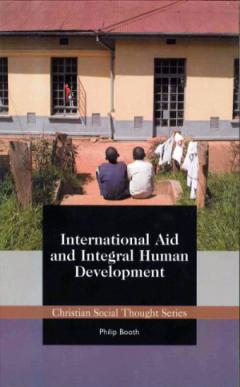
International aid has come in for a lot of criticism recently and with the debate on the federal budget just beginning, U.S. funding for aid is on the chopping block.  With a rising deficit, and a struggling economy, many are asking why the United States chooses to continue funding international, or foreign, aid. People of faith are often caught in the middle of the debate on whether international aid should or shouldn’t be cut, along with the role the state should play.

Read more on International Aid and Integral Human Development…

In a follow up to Jordan Ballor’s commentary last week, “Christian Giving Begins with the Local Church,” here is a related excerpt from Darren Dochuk’s From Bible Belt to Sunbelt: Plain-Folk Religion, Grassroots Politics, and the rise of Evangelical Conservatism. I will review the new book published by Norton in the next issue of Religion & Liberty and for the PowerBlog. The excerpt from Dochuk’s book is an excellent reflection of not just how the local church can fulfill their Gospel mandate to help the poor, but also empower and build the community:

Read more on Empowerment through Giving within the Local Church…

Throughout Caritas in Veritate there is a strong message to help the poor.  This is an age old belief held by many.  It can be found throughout the Bible and is preached by Christians and members of differing faiths.

Read more on Caritas in Veritate: How to Help the Poor…

A 2001 radio interview of Barack Obama surfaced yesterday in which he said that “one of the tragedies of the Civil Rights movement,” and one of the limitations of the Warren Supreme Court, was that although they won such formal rights as the right to vote and “sit at the lunch counter and order,” they “never ventured into the issues of redistribution of wealth.”

Read more on Obama Reparations Radio Interview Begs a Question: Does Wealth Redistribution Actually Help the Poor?…

Writing a commentary for the United Methodist News Service, J. Richard Peck encourages readers to heed John Wesley’s advice on economic policy. “In short, Wesley called for higher taxes upon the wealthy and laws that would prohibit the wasting of natural products,” says Peck. He notes that the cure for economic troubles relating to the poor was to repress luxury.

Read more on Is John Wesley’s Economic Advice Sound?…

Ray Nothstine
posted by on Friday, November 16, 2007

“If a man shuts his ears to the cry of the poor, he also shall cry himself, but shall not be heard.” Proverbs 21:13

I remember being very young and hearing a minister dramatically describe the flames and fires of hell in a sermon. I know I was somewhere between the age of six and seven. At this time, I also had little knowledge of salvation in Christ, so I worried about my eternal destination. Couple this thought with a dream I remember having even earlier as a child, where in the dream I was being chased by a devil with a pitchfork. Wrapped with fear by just the possibility of damnation I was drawn to scripture that talked about heaven and hell.

Read more on God Hears the Compassionate…

Jordan J. Ballor
posted by on Thursday, August 23, 2007

Readings in Social Ethics: Abraham Kuyper, The Problem of Poverty. References below are to page numbers.

  • With next week’s reading of Rauschenbusch in view, here’s how Kuyper evaluates Christian socialists: “Socialists constantly invoke Christ in support of their utopias, and continually hold before us important texts from the Holy Word. Indeed, socialists have so strongly felt the bond between social distress and the Christian religion that they have not hesitated to present Christ himself as the great prophet of socialism” (27).

Read more on Kuyper, The Problem of Poverty

Readings in Social Ethics: John Wesley, “The Rich Man and Lazarus.” References below are to page numbers.

  • A warning on the dangers of riches: “‘There was a certain rich man.’ And it is no more sinful to be rich than to be poor. But it is dangerous beyond expression. Therefore, I remind all of you that are of this number, that have the conveniences of life, and something over, that ye walk upon slippery ground. Ye continually tread on snares and deaths. Ye are, every moment, on the verge of hell. ‘It is easier for a camel to go through the eye of a needle, than for a rich man to enter into the kingdom of heaven.’ ‘Who was clothed in purple and fine linen.’ And some may have a plea for this: our Lord mentions them that dwell in kings’ houses, as wearing gorgeous, that is splendid apparel, and does not blame them for it. But certainly this is no plea, for any that do not dwell in kings’ houses. Let all of them, therefore, beware how they follow his example, who is lifting up his eyes in hell: let us follow the advice of the Apostle, being ‘adorned with good works, and with the ornament of a meek and quiet spirit’” (316).

Read more on John Wesley, ‘The Rich Man and Lazarus’…

Acton PowerBlog RSS

Google Plus

Twitter Feed

Facebook Fan Page

Support the Acton Institute

The Acton Institute is funded through the generous contributions of individuals such as yourself. Learn more about how you can advance the cause of freedom and virtue.