Posts tagged with: reconciliation

Jordan J. Ballor
posted by on Tuesday, September 29, 2009

Last week Rick Warren’s church hosted the fourth Saddleback Civil Forum. This time the forum focused on reconciliation, particularly on the roles of the church and the government in promoting and fostering reconciliation after crime and conflict.

Read more on Church, State, and Restorative Justice…

Jordan J. Ballor
posted by on Friday, June 26, 2009

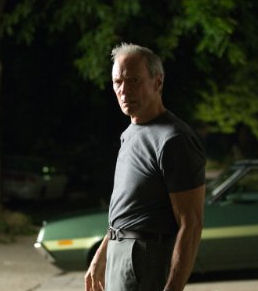
Clint Eastwood’s 2008 project Gran Torino has recently been released on DVD, and what a delight it is. Eastwood plays Walt Kowalski, a Korean War vet and retired auto worker whose wife has just passed away.

I was unable to catch the film in theaters, despite my desire to do so. Based in Michigan, Gran Torino was filmed places like Royal Oak, Warren, Grosse Pointe, and Highland Park. As the production notes state, “Though the screenplay was initially set in Minneapolis, Eastwood felt Walt’s past as a 50-year auto worker would resonate most as a resident of ‘Motor City’—Detroit, Michigan.”

It was a wise decision. Everything about Gran Torino rings true, from Walt’s disdain for his priest, whom he calls “an overeducated 27-year-old virgin,” to his way of speaking (he “slings racial slurs like most people use nouns and verbs”), to the local ambiance (including a “ghetto clothesline” in the basement of Walt’s Hmong neighbors). The film’s action revolves around the title character, a 1972 Gran Torino, Walt’s prized possession, a car that he had a hand in building himself. Walt’s bigotry extends most virulently to his neighbors, the Lor family, Hmong immigrants from southeast Asia. One of the boys in the family, Thao, is eventually pressured into joining a neighborhood gang. His first assignment is to steal Walt’s car.

gt1
Read more on Movie Review: Gran Torino Works…

Catherine Larson
posted by on Thursday, April 23, 2009

It is our pleasure to welcome guest ramblings on the PowerBlog, and we are happy to feature this contribution from Catherine Claire Larson, author of As We Forgive, the subject of this week’s PBR question.

Read more on PBR: Enterprise and Interdependence…

Jordan J. Ballor
posted by on Wednesday, April 22, 2009

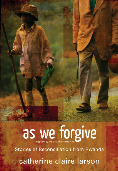
main-book1Catherine Claire Larson’s book As We Forgive: Stories of Reconciliation from Rwanda is an exploration of forgiveness and reconciliation in the years following the Rwandan genocide in 1994. Fifteen years ago this month, a plane carrying the presidents of Rwanda and Burundi was shot down on a return trip from Tanzania, sparking widespread ethnic violence across the country. By the time the civil war was declared over on July 18, 1994, between 800,000 and 1 million Rwandans had been killed.

Read more on PBR Review: As We Forgive

Jordan J. Ballor
posted by on Monday, April 20, 2009

This year April 6th marked the 15th anniversary of beginning of the genocide in Rwanda. Catherin Claire Larson, a senior writer and editor at Prison Fellowship Ministries, has written a new book called As We Forgive: Stories of Reconciliation from Rwanda, which focuses on how such wounds opened up fifteen years ago are being healed today. (Larson’s book is inspired by the award-winning film of the same name, which debuted in April 2008. Comment carried an interview with Laura Waters Hinson, the driving force behind the documentary film.)

Read more on PBR: Rwanda and Reconciliation…

The Truth and Reconciliation Commission (TRC) in post-apartheid South Africa has been hailed as the standard for working for restorative justice in the contemporary world.

One of the misunderstandings surrounding the work of the commission, however, involves the relationship between the forgiveness, reconciliation, and amnesty offered by the commission in relation to the coercive power of the state.

Read more on The Truth about Force in Reconciliation…

The Christian Reformed Church in North America (CRC) is considering the addition of the Belhar Confession to its set of doctrinal standards, which currently include the ecumenical creeds (Apostles’, Nicene, Athanasian) and Reformed confessions (Belgic Confession, Heidelberg Catechism, Canons of Dordt).

Read more on Confession, Reconciliation, and the CRC…

Acton PowerBlog RSS

Google Plus

Twitter Feed

Facebook Fan Page

Support the Acton Institute

The Acton Institute is funded through the generous contributions of individuals such as yourself. Learn more about how you can advance the cause of freedom and virtue.