Posts tagged with: russell kirk

David Brooks recently took on the conservative movement for relying too heavily on pro-market arguments and tired formulas rather than emphasizing its historic features of custom, social harmony, and moral preservation.

As I’ve already noted in response to the Brooks piece, I agree that conservatism needs a renewed intellectual foundation brought about by a return to these emphases, yet I disagree that a lopsided devotion to “economic freedom” is what’s stalling us. If we hope to restore traditionalist conservatism, we’d do well to recognize that this means restoring economic conservatism along with it. Brooks is upset that dogmatic pro-market folks have seized the Republican Party, yet this is the same Republican Party that nominated the architect of Romneycare and can’t seem to get serious about the deficit.

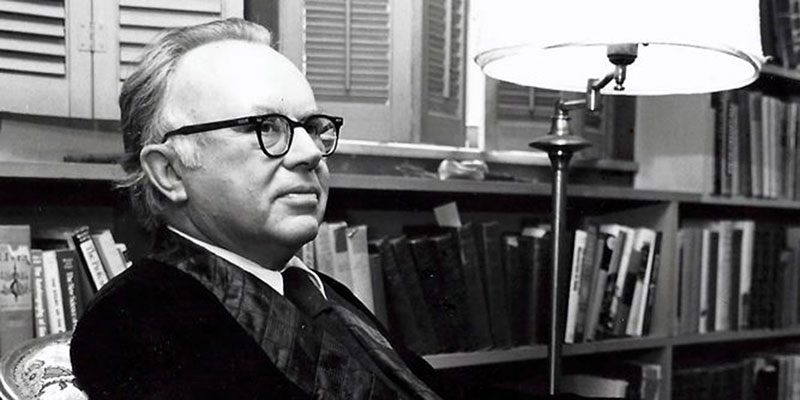
Conservatism is faltering all around, and the reasons for each “sect’s” demise are more or less interrelated. As I’ve written elsewhere, we need to restore a holistic conservative imagination that ties its social and economic strains together by grounding them both in Russell Kirk’s “enduring moral order.”

For David Brooks, restoration is all about “balance,” but for the true conservative, it needs to be about integration.
Read more on David Brooks, Economic Liberty, and the Real Threat to Social Preservation…

Over at Y’all Politics, Mississippi State Senator Chris McDaniel penned an excellent essay on conservatism and the moral order. Deeply influenced by Russell Kirk, McDaniel’s words are worth the read. They are a reminder that sustainable political liberty has to have a proper moral order and foundation for society to flourish. Below is an excerpt of his essay:

Read more on Miss. State Senator Chris McDaniel on Self-Government & the Moral Order…

John Couretas
posted by on Friday, June 24, 2011

Ben Shapiro was at the Heritage Foundation recently to talk about his new book, Primetime Propaganda: The True Hollywood Story of How the Left Took Over Your TV. Publisher HarperCollins describes the book as “the inside story of how the most powerful medium of mass communication in human history has become a propaganda tool for the Left.”

Read more on ‘Narrative Matters’…

Is it conceivable to endorse the cinematic adaptation of Ayn Rand’s libertarian manifesto Atlas Shrugged – as I do – while rejecting the flawed ideology which inspired it?

I would argue, yes. On the one hand, I place the Beatles at the pinnacle of 1960s pop music while concluding that their song “Mr. Moonlight” is wince-inducing to the point of being unlistenable. Likewise, I admire 99.9 percent of G.K. Chesterton’s body of work yet disagree with him on his assertion only men should vote. On the other hand, I disagree for the most part with Camille Paglia’s worldview yet admire her writing style and intellectual honesty.

Read more on Atlas Shrugged – See the Movie, Skip the Book…

Last night a band of hearty travelers braved the first snow of the season here in Grand Rapids (and the attendant slick and dangerous roads) to hear Dr. John H. Armstrong speak at the November/December Acton on Tap, “Ecumenism and the Threat of Ideology.” Dr. Armstrong is founder of ACT 3 and adjunct professor of evangelism at Wheaton College.

Read more on Acton on Tap: Ecumenism and the Threat of Ideology…

Bruce Edward Walker
posted by on Thursday, November 18, 2010

Joseph Epstein’s essay, “T.S. Eliot and the Demise of the Literary Culture,” in the November issue of Commentary, strengthens the case for The Waste Land author’s enduring legacy. Epstein captures the high points of Eliot’s biographical and literary accomplishments in only eight pages – an admirable feat given the extent of Eliot’s influence on the past century. After filling out the checklist of Eliot’s early poetry, friendships, jobs, marriages, alleged anti-Semitism, and criticism by rote, Epstein concludes Eliot was a tremendous poet and literary critic more than likely destined to be forgotten due to the imminent collapse of Western culture.

One cannot help but agree with Epstein’s assessment of Eliot as an erudite writer and speaker who could fill a hall with 15,000 attendees – in Minnesota, no less – eager to hear the Nobel laureate speak on literature. Epstein notes it is doubtful any writer living today could match Eliot’s drawing power for a live audience. But the Internet and television render such expectations moot. For example, I don’t have counts on how many people visit Web sites devoted to Seamus Heaney, another Nobel laureate poet, but one can easily imagine a number such as 15,000 boosted a hundred-fold.

Likewise, I respectfully reject Epstein’s too-easy assessment of Eliot as the last of a dying breed and the end of culture. While admitting many of Epstein’s concerns about the present and future cultural climate, your writer is not quite ready to throw in the towel. Call me stubborn, foolish or naïve. But I witness culture thriving on a daily basis, from the glorious Gilead by Marilynne Robinson to the agrarian short stories, novels and poetry of Wendell Berry.

Let readers recall as well Eliot knew that our literary tradition evolved, subsuming all that was best from preceding generations as well as what was once considered avant-garde. It’s easy to dismiss contemporary culture simply because there’s so much Cracker Jack to riffle through before finding the prize.

Depicting Eliot as nothing more than a literary high-brow, in any event, misses the totality of a fascinating individual who boasted of his correspondence with Julius Henry Marx – the inimitable middle sibling Groucho of the Marx Brothers and You Bet Your Life television legend – and a English Music Hall regular who would have been more than likely pleased by the success of the Broadway musical Cats based on Eliot’s children’s book, Ol’ Possum’s Book of Practical Cats. Read more on Secular Waste Lands and Hollow Men…

In this week’s Acton Commentary, I reviewed a new book by George H. Nash on the history of the American conservative movement:

Reappraising the Right

By Bruce Edward Walker

In his 1950 work, “The Liberal Imagination,” Lionel Trilling famously stated that American liberalism was the one true political philosophy, claiming it as the nation’s “sole intellectual tradition.”

Unknown to him, two young men — one toiling as a professor at Michigan State Agricultural College (now Michigan State University) and the other finishing his degree at Yale University – would publish two articulate, galvanizing works. The first, Russell Kirk, unleashed “The Conservative Mind,” in which he defined conservatives as being wary of change, revolutions and ideologies in the manner of Irish statesman Edmund Burke. The second, William F. Buckley, first published “God and Man at Yale” and later inaugurated The National Review, the first issue bearing Buckley’s definition of a conservative as one who stands “athwart history, yelling stop!”

Slight differences, to be sure, but, as George H. Nash notes in his excellent “ Reappraising the Right ,” these variations are indicative of the inherent schisms in the modern American conservative tradition from its beginning.

Both Kirk and Buckley agreed that the conservative tradition had its roots in spirituality –specifically, the Judeo-Christian tradition. Morality and right-thinking come not from man, but from a higher power. Furthermore, humankind will continue to succumb to the temptations and appetites of the flesh it has been heir to since the Fall. The two men took as articles of faith that humanity is not perfectible and that the striving for earthbound utopias is foolhardy.

Kirk, writing from the “stump country” of Mecosta, Michigan, and Buckley, writing and speaking in his Brahmin-drenched New England patois, differed in their views of where conservatism derived, what precisely it was and where it should go. Despite their differences, Kirk wrote a column for nearly every issue of National Review from its inception and for almost 30 years.

The early 1950s were watershed years, to be sure, because as soon as a new conservative front was established, the fortress was besieged from within and without. The 1964 Barry Goldwater campaign against Democrat incumbent President Lyndon Johnson notwithstanding, the high water mark of conservatism in the lifetime of most readers would more than likely be defined as the victory of Ronald Reagan over Jimmy Carter in the 1980 election. Reagan, a former Hollywood actor, supporter of Goldwater in the 1964 election, and former California governor, became an icon for all that modern conservatism came to represent: low taxes, personal responsibility and small government.

Read more on Acton Commentary: Reappraising the Right…

Can you discern a nation’s spirit, even its economic genius, from the literature it produces? That’s long been a pastime of literary critics, including those who frequently see the “original sins” of Puritanism and capitalism in the stony heart of Americans.

Writing in Commentary Magazine, Fred Siegel looks at just this problem in a new appreciation of cultural critic and iconoclast Bernard DeVoto’s three-decade campaign to rescue American letters from the perception that European aesthetics were superior to the homegrown variety.

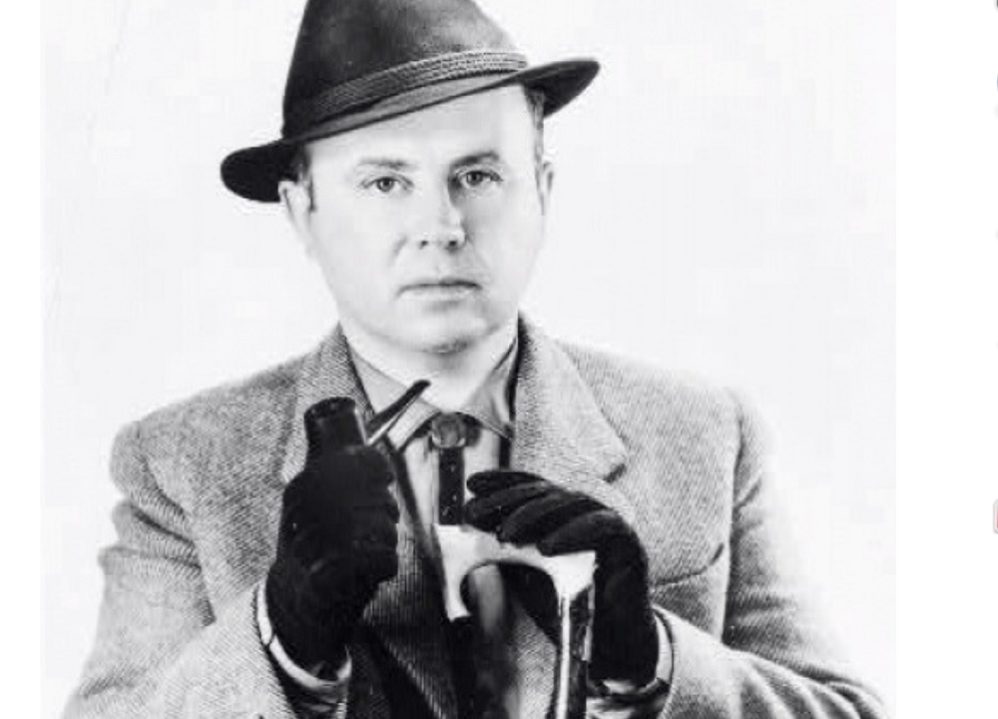
Bernard DeVoto at his desk (ca. 1954)

Bernard DeVoto at his desk (ca. 1954)

According to Siegel, DeVoto was the lone voice speaking out against the literary intelligentsia of the age. While it is true that DeVoto had his moments of clarity regarding literature, especially as it pertains to his insights that rescued Mark Twain’s work from a certain obscurity, Siegel nonetheless inflates DeVoto’s total contribution to cultural criticism.

Indeed, DeVoto was erudite and a prodigious writer. But, despite Siegel’s assertions, he wasn’t a particularly astute observer of the literary landscape. In fact, he was a bit of a cranky pants who wedged works he didn’t fully understand too quickly into an easy anti-American category. This strategy yielded diminishing returns for DeVoto’s reputation, which is probably the primary reason why his name is seldom if ever mentioned in the canon of literary criticism. Siegel’s rebranding attempt is not likely to help. DeVoto penned the monthly Easy Chair column for Harper’s from 1935 to 1955, won a Pulitzer Prize for his book, “Across the Wide Missouri,” and wrote “Mark Twain’s America.” Siegel notes that DeVoto’s “most important book,” however, was the 1944 volume, “The Literary Fallacy.” In it, Siegel asserts, DeVoto “illuminated the inner life of modern liberalism as no one had before or since.” Read more on Acton Commentary: Reading it Wrong – Again…

Working as we do here at the intersection between economics and theology, the relationship between various kinds of classically liberal, libertarian, Austrian, and other economic modifiers and religion in general and Christianity in particular is in constant view. Sometimes the conversation is friendly, sometimes not so much. Sometimes the differences are less apparent, sometimes more.

Read more on What hath Vienna to do with Colorado Springs?…

My commentary today looks at President Obama’s deft use of narrative — the art of story telling — to inspire and motivate. By his own admission, Obama has taken a page from the playbook of the Great Communicator himself, Ronald Reagan.

Read more on Acton Commentary: Obama and the Moral Imagination…

Acton PowerBlog RSS

Google Plus

Twitter Feed

Facebook Fan Page

Support the Acton Institute

The Acton Institute is funded through the generous contributions of individuals such as yourself. Learn more about how you can advance the cause of freedom and virtue.