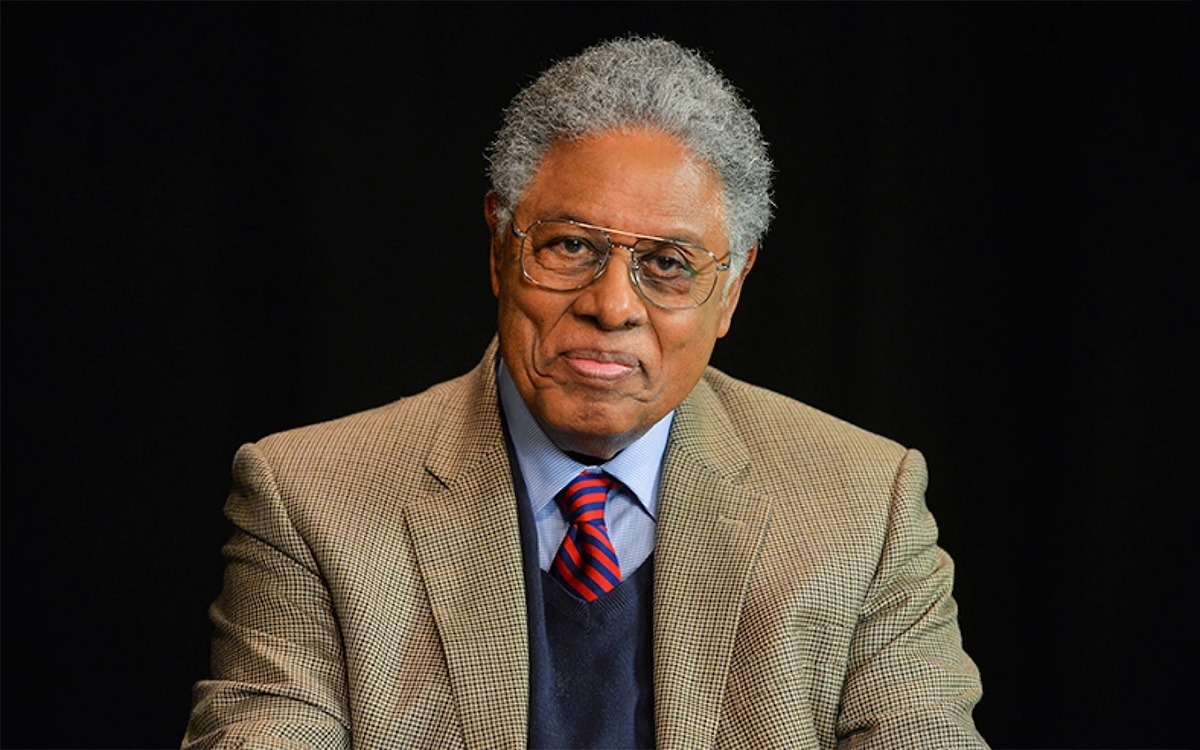
Posts tagged with: Thomas Sowell

Joe Carter
posted by on Thursday, May 31, 2012

Telling young people that some jobs are menial, says Thomas Sowell, is a huge disservice to them and to society:

It was painful, for example, to see an internationally renowned scholar say that what low-income young people needed was “meaningful work.” But this is a notion common among educated elites, regardless of how counterproductive its consequences may be for society at large, and for low-income youngsters especially.

Read more on What is ‘Meaningful Work’?…

John Couretas
posted by on Wednesday, August 10, 2011

My contribution to today’s Acton News & Commentary. Sign up for the free weekly Acton email newsletter here.

Protect the Poor, Not Poverty Programs

By John Couretas

One of the disturbing aspects of the liberal/progressive faith campaign known as the Circle of Protection is that its organizers have such little regard – indeed are blind to — the innate freedom of the human person.

Read more on Protect the Poor, Not Poverty Programs…

Louie Glinzak
posted by on Wednesday, August 3, 2011

The recent budget battle may have sparked new questions for Americans to answer, such as what is poverty and who falls under such a classification? Furthermore, due to its massive debt, government may need a limited role in helping the poor. While Christians who stood behind the Circle of Protection advocated for the protection of programs they claim that benefit the poor, other Christians looked at the debate differently arguing for another way to help the poor. However, despite how we decide to help the poor, is our understanding of what it means to be poor misleading?

Read more on Rethinking Poverty…

John Couretas
posted by on Friday, April 15, 2011

Jim Wallis: Paul Ryan is A Bully & Hypocrite

Not so long ago, the Rev. Jim Wallis was positioning himself as the Chief Apostle of Civility, issuing bland pronouncements about all of us needing to get along. His “A Christian Covenant For Civility,” barely a year old, is now looking more tattered than a Dead Sea Scroll. Of course, he took up the civility meme back when he was hoping to brand the Tea Party as a horde of un-Christian, poor-hating libertarian bullying racists who enjoy nothing more than kicking widows and orphans with their hobnailed jackboots. Here he is last year warning America about the hostile Tea Party threat: “Honest disagreements over policy issues have turned into a growing vitriolic rage against political opponents, and even threats of violence against lawmakers are now being credibly reported.”

Ah, but the Apostle of Civility fled the agora. Right about the time that the vicious and violent attacks started on elected officials like Wisconsin Gov. Scott Walker and Michigan Gov. Rick Snyder. It’s routine anymore to hear thuggish threats at state capital protests such as, “The only good Republican is a dead Republican” — and worse. (see video at bottom of post but be warned: rough images and language.)

Now, Wallis has returned, wearing the robes of an Old Testament Prophet, the scourge of those who would oppress the poor and bargaining unit members in threatened civil service classifications. The tip off was the title of his latest Huffington Post article, “Woe to You, Legislators!” Nice touch, that. More, from Wallis, who channels Isaiah:

You may think that my language sounds too strong: “bullies”, “corrupt”, “hypocrites.” But listen to the prophet Isaiah:

“Doom to you who legislate evil, who make laws that make victims — laws that make misery for the poor, that rob my destitute people of dignity, exploiting defenseless widows, taking advantage of homeless children. What will you have to say on Judgment Day, when Doomsday arrives out of the blue? Who will you get to help you? What good will your money do you?” (Isaiah 10:1-3, The Message)

Ryan’s budget seems to follow, almost line by line, the “oppressive statues” Isaiah rails against. Ryan’s budget slashes health care for the poor and elderly by gutting Medicaid and undermining Medicare, and cuts funding for food stamps, early childhood development programs, low-income housing assistance, and educational programs for students.

Phrases such as “gutting Medicaid” are not designed to inform, but to inflame. This is the work of a demagogue. Read more on Jim Wallis Drops the Sham Civility…

“Intellectuals and Society,” by Thomas Sowell, (2009) Basic Books, New York, 398 pp.

Arguments about ideas are the bread and butter of the academic, journalism and think tank worlds. That is as it should be. Honest intellectual debate benefits any society where its practice is allowed. The key element is honesty.

Today, someone is always looking to take out the fastest gun, and in the battles over the hearts and minds of the public many weapons are brought to bear. Unfortunately, and too often, among the artillery deployed by both sides in an argument are rhetorical deception, misleading statistics and an air of authority, which can immediately bury facts in the Boot Hill of honest debate.

Seldom held accountable for the violence brought to bear on the verifiable when their ideas lead to long-lasting negative effects, many of these intellectual gunslingers head into battle confident that their wits will save the world from another perceived plight.

Fortunately, Thomas Sowell is one of the fastest intellectual guns in the proverbial corral. His latest, Intellectuals and Society, finds the erudite economist turning his guns on the so-called intellectuals who attempt and too often succeed in swaying public opinion and political policy where the arrogance of intellect too often is the smart bomb dropped squarely on empirical evidence.

Indeed, intellectual folly knows no ideological parameters. However, Sowell divides intellectuals into two classes, where ideological divides are readily identifiable. The first is comprised of those with a constrained, or tragic, view of the world. To a conservative sympathetic to writers such as Russell Kirk and T.S. Eliot, there is an understanding that humankind is fallen and that there can be no heaven on Earth. Eliot and Kirk held that a worldview is only viable inasmuch as it reflects what Edmund Burke called the moral imagination, which he defined as, “the power of ethical perception which strides beyond the barriers of private experience and events of the moment …” Read more on Review: Thomas Sowell’s Field Guide to Intellectuals…

Back in 1983, economist Thomas Sowell wrote The Economics and Politics of Race, an in-depth look at how different ethnic and immigrant groups fared in different countries throughout human history. He noted that some groups, like the overseas Chinese, Japanese, and Jews, tended to thrive economically no matter where they went, bringing new skills to the countries that they arrived in and often achieving social acceptance even after facing considerable hatred and violence. Other groups, like the Irish and the Africans, tended to lag economically and found it difficult to become prosperous.

Sowell explained many of these differences by looking at the cultures both of the immigrant groups and of the dominant powers in the countries that they moved to. The Chinese, Japanese, and Jews, for example, valued work. They often arrived in countries with little more than the clothes on their backs, but they worked long and hard hours in menial labor and saved money scrupulously to make life better for their children. Even if they lacked social acceptance, they were allowed the freedom to develop their talents and contribute to the economic life of their new homes.

Irish and African cultures were never offered these opportunities. Ireland’s feuding lords had prevented hard work from being rewarded in Ireland, a situation that only got worse with British occupation. Sowell shows how Africans were similarly discouraged from working hard because slavery and the Jim Crow Era made it impossible for skills and effort to pay off in better standards of living. So long as hard work never paid off, there was no incentive for Irish or African cultures to emphasize entrepreneurship, and the members of these ethnic groups suffered from poverty rates much higher than those of other populations in the places they lived.

Fast forward to 2009. With many of the institutional barriers to the advancement of ethnic minorities gone from most countries, historically disadvantaged groups are catching up with the general population in economic terms. Pope Benedict revisited the theme of economics and culture in his encyclical Caritas in Veritate, coming to similar conclusions as Sowell does about the role that culture plays in the development of the human person. Read more on Sowell and Benedict XVI on Economics and Culture…

Acton PowerBlog RSS

Google Plus

Twitter Feed

Facebook Fan Page

Support the Acton Institute

The Acton Institute is funded through the generous contributions of individuals such as yourself. Learn more about how you can advance the cause of freedom and virtue.