The Rise and Fall of Kwame Kilpatrick

Monday, September 15, 2008
There’s a good read from a state politician familiar with Kwame Kilpatrick, the former Detroit mayor accused of all manner of illicit activity, in the Sep. 12 newsletter (PDF) from Michigan state senator Mickey Switalski (D-Roseville). Switalski’s newsletter is one of the best and is atypical among state politicians, because he writes the content himself.

Before his current run as a state senator, Switalski was a state representative during Kilpatrick’s tenure as Democratic Floor Leader, the #2 position in the Democratic caucus. In his piece on Kilpatrick, Switalski offers what you might expect to be a sympathetic perspective, given their time spent as colleagues and their shared party affiliation (I spent a semester as a legislative intern for then-Representative Switalski in the spring of 2000). Yet Switalski offers what I think is a fair and balanced assessment, based on his judgment that Kilpatrick “is a complex person with many strengths and some tragic weaknesses.”

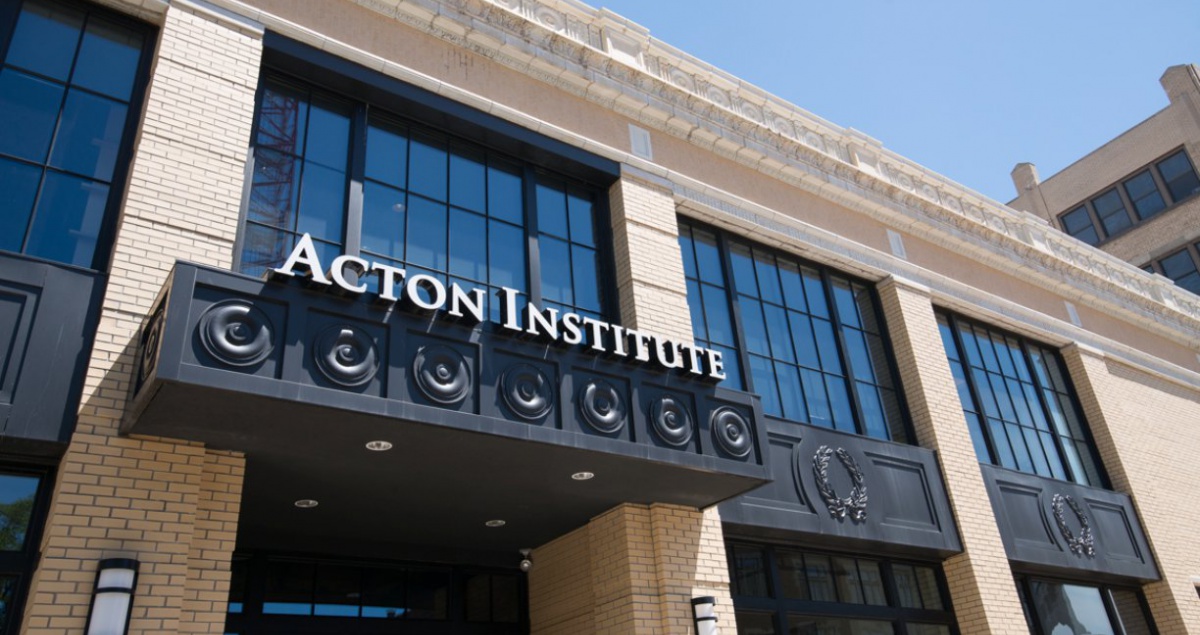
“The Rise and Fall of Kwame Kilpatrick” is a narrative embodying the wisdom of Lord Acton’s dictum that “power tends to corrupt.” Switalski gives us an inside look at state politics, describing the legislature as “an insane asylum,” given the turbulent dynamics at the time. But Kilpatrick was a voice of reason and stability during the ravages of partisan bickering.

Ultimately Switalski judges that Kilpatrick “had too much power too early. He indulged his prodigious appetites and lacked the maturity and judgment to control his desires and became corrupt.”

Switalski wonders, “Were these faults always there?”

“I suppose they were,” he answers.
But how could a man who saw public service with such clarity in 2000 become so blind and ethically lost just a few years later? It is a sad tale, both for him and for the City. Unlike many people I know, who seemed to relish in his failure, I took no joy in watching him self-destruct. It was an awful waste of talent and opportunity. It was a tragedy for the City and the Region.

I pray his successors will not let power lead them into temptation, and so avoid a similar fate.

Switalski is correct to point to the tragedy of the demise of Kwame Kilpatrick, and that we should always realize the danger that power presents and the responsibility that it entails.

Even those who recognize, as Kwame did, that politicians have a duty to their constituents and “doing good policy for the people we serve” can be corrupted by the illusions of power and the delusions of privilege.
Bookmark The Rise and Fall of Kwame Kilpatrick  at del.icio.us Digg The Rise and Fall of Kwame Kilpatrick Bloglines The Rise and Fall of Kwame Kilpatrick Technorati The Rise and Fall of Kwame Kilpatrick Bookmark The Rise and Fall of Kwame Kilpatrick  at YahooMyWeb Bookmark The Rise and Fall of Kwame Kilpatrick  at Furl.net Bookmark The Rise and Fall of Kwame Kilpatrick  at reddit.com Bookmark The Rise and Fall of Kwame Kilpatrick  with wists Bookmark using any bookmark manager!

Michigan Science, No. 7, Spring 2008

Wednesday, July 16, 2008
The newest issue of Michigan Science has been posted by the Mackinac Center for Public Policy. I especially enjoyed reading Deneen Borelli’s piece on the failed “cap and trade” legislation titled, “Just the Facts.”

Borelli looks at what cap-and-trade legislation would mean for Michigan consumers and businesses. She and I both noted in articles the hardest hit would be households with lower income. It seems like an obvious point, but it is still amazing that many policy makers and religious leaders actually endorsed the legislation, considering a further increase in energy prices by legislative fiat is ill timed. Unfortunately, as I pointed out in my June commentary, we probably haven’t heard the last of cap-and-trade. Many new green policy initiatives serve as the new vehicle of choice for those who favor more government spending and regulatory action.

Also in the current issue of Michigan Science, I contributed an article on Central Michigan University students who dominated the state GIS competition in Livonia, Michigan.
Bookmark <em>Michigan Science</em>, No. 7, Spring 2008  at del.icio.us Digg <em>Michigan Science</em>, No. 7, Spring 2008 Bloglines <em>Michigan Science</em>, No. 7, Spring 2008 Technorati <em>Michigan Science</em>, No. 7, Spring 2008 Bookmark <em>Michigan Science</em>, No. 7, Spring 2008  at YahooMyWeb Bookmark <em>Michigan Science</em>, No. 7, Spring 2008  at Furl.net Bookmark <em>Michigan Science</em>, No. 7, Spring 2008  at reddit.com Bookmark <em>Michigan Science</em>, No. 7, Spring 2008  with wists Bookmark using any bookmark manager!

Imprisonment and Government Expenditures

Friday, February 29, 2008
There’s a lot of consternation, much of it justified, about the news that now 1% of the population of the United States is incarcerated. Especially noteworthy is a comparison of the rate of imprisonment with institutionalization in mental health facilities over the last century.

But a breathless headline like this just cannot pass without some comment: “Michigan is 1 of 4 states to spend more on prison than college.”

Given the fact that policing, including imprisonment, is pretty clearly a legitimate function of the state (at least as broadly conceived in the Christian tradition, see Romans 13), while providing post-secondary education is not so obviously a responsibility for the government (n.b. I did go to a state school), maybe more states should spend more on prison than college...leaving college to private institutions.

Maybe this just means Michigan’s state government has its spending priorities more in order than other states. That truly would be newsworthy.

Update: Sometime PowerBlog contributor and longtime friend of Acton John H. Armstrong takes a look at the numbers and concludes, “For the overwhelming majority of inmates they are where they should be and we are all much safer, so it seems.” I think Ray expressed some similar sentiments in the office yesterday.
Bookmark Imprisonment and Government Expenditures  at del.icio.us Digg Imprisonment and Government Expenditures Bloglines Imprisonment and Government Expenditures Technorati Imprisonment and Government Expenditures Bookmark Imprisonment and Government Expenditures  at YahooMyWeb Bookmark Imprisonment and Government Expenditures  at Furl.net Bookmark Imprisonment and Government Expenditures  at reddit.com Bookmark Imprisonment and Government Expenditures  with wists Bookmark using any bookmark manager!

A Single-State Recession

Tuesday, June 5, 2007
The number of jobs (nonfarm, not seasonally-adjusted) added to the US economy since 2004 numbers around 6 million.

But over the same period, Michigan has lost over 50,000 jobs. What’s going on?

A relative of mine recently described to me the situation from his perspective. His company has an office located in Michigan, and of the rather modest net profits accrued by the Michigan location, over 56% were paid to the state by means of the Single Business Tax (SBT).

The SBT has now been phased out going forward, but there’s been a huge partisan battle between Republicans in the state congress and Democratic Governor Jennifer Granholm about what to do. The debates are well-chronicled on the Democratic side by the ranking Democrat on the Senate Appropriations Committee, Senator Mickey Switalski (see, for instance, the Feb. 23, 2007 edition of his newsletter, The Insider).

It looks now like the new tax policy replacing the SBT will be “revenue neutral,” in large part because the state was already facing a $1 billion budget deficit before the SBT was to be phased out. Besides the punitive SBT, many blame the employment climate in Michigan on the state’s “heavily unionized culture.”

The “revenue neutral” nature of the new tax plan seems to indicate to me that businesses in Michigan can continue to expect big chunks of their profits going to the state’s coffers. And that can only mean that Michigan’s single-state recession will continue, even if the tax penalty for adding payroll is modified under the new plan.
Bookmark A Single-State Recession  at del.icio.us Digg A Single-State Recession Bloglines A Single-State Recession Technorati A Single-State Recession Bookmark A Single-State Recession  at YahooMyWeb Bookmark A Single-State Recession  at Furl.net Bookmark A Single-State Recession  at reddit.com Bookmark A Single-State Recession  with wists Bookmark using any bookmark manager!

The State of Discontent

Friday, March 9, 2007
Some of Michigan’s economic woes are pretty well outlined in an editorial in today’s OpinionJournal, “MoveOnOutofMichigan.org”.

It begins by noting a symbolically important defection:
Comerica Inc. was founded in 1849 in Detroit and the Detroit Tigers play in Comerica Park, but this week the bank holding company announced it is moving its headquarters to Dallas--where, it said, the bigger growth opportunities are. Consider it one more vote of confidence in the state the national expansion forgot, and especially in Michigan Governor Jennifer Granholm’s economic agenda.

Read the rest here.

Michigan’s unemployment rate was 6.9% in January, the worst in the US, and has been one of the worst in the nation for about the last two years.

As a side note, the actual website MoveOnOutofMichigan.org is “coming soon.”
Bookmark The State of Discontent  at del.icio.us Digg The State of Discontent Bloglines The State of Discontent Technorati The State of Discontent Bookmark The State of Discontent  at YahooMyWeb Bookmark The State of Discontent  at Furl.net Bookmark The State of Discontent  at reddit.com Bookmark The State of Discontent  with wists Bookmark using any bookmark manager!

Conservatives and the GOP

Monday, November 13, 2006
In an op-ed last week, Acton senior fellow Jerry Zandstra argues that in Michigan, even though the GOP lost, conservatives won. In “GOP loses, but conservatives win in Michigan” Zandstra explains the phenomenon that “Conservative positions won in the ballot initiatives but Republican candidates lost.”

Some more evidence that Republicans have generally abandoned conservative economic principles comes from Cato@Liberty’s examination of the voting records of ousted GOP lawmakers (HT: AmSpec Blog).

The conclusion? “The great majority of losing Republicans were economic moderates or liberals. Few of the losers were above the 70th percentile in their votes on economic issues.”
Bookmark Conservatives and the GOP  at del.icio.us Digg Conservatives and the GOP Bloglines Conservatives and the GOP Technorati Conservatives and the GOP Bookmark Conservatives and the GOP  at YahooMyWeb Bookmark Conservatives and the GOP  at Furl.net Bookmark Conservatives and the GOP  at reddit.com Bookmark Conservatives and the GOP  with wists Bookmark using any bookmark manager!

State and Local Faith-Based Initiatives

Thursday, November 9, 2006
One thing that President Bush’s formation of the White House Office of Faith-Based and Community Initiatives did was lead the way for the formation of similar offices at various other levels of government.

For example, in Michigan, Gov. Granholm formed the Governor’s Office of Faith-Based and Community Initiatives by means of an executive order in March, 2005. And the city government in Lansing also has such an office, formed in August of this year, and has recently announced the agenda for the effort (HT: Religion Clause).

If David Kuo wants to portray the president’s faith-based initiative as nothing more than a political ploy with no substance, he’s going to have to account for all the work that is potentially being done at all these other levels of government. (I say potentially because there are of course questions about how these efforts have been implemented and what sort of work they are actually doing.)

Perhaps the formation of such community and faith-based offices at other levels were unintended by the Bush campaign, but even so they now mean that the work of governmental faith-based initiatives is no longer simply identical and coextensive with that of the White House office.
Bookmark State and Local Faith-Based Initiatives  at del.icio.us Digg State and Local Faith-Based Initiatives Bloglines State and Local Faith-Based Initiatives Technorati State and Local Faith-Based Initiatives Bookmark State and Local Faith-Based Initiatives  at YahooMyWeb Bookmark State and Local Faith-Based Initiatives  at Furl.net Bookmark State and Local Faith-Based Initiatives  at reddit.com Bookmark State and Local Faith-Based Initiatives  with wists Bookmark using any bookmark manager!

Ranking Small Business & Entrepreneurship

Friday, November 3, 2006
Forbes passes along a ranking of the fifty states (plus the District) on the friendliness of fiscal policy toward small business (HT: The Entrepreneurial Mind), provided by the Small Business & Entrepreneurship Council (PDF).

Michigan ranked 10th in the list, which examines 29 governmentally-influenced factors such as personal income tax, capital gains tax, corporate income tax, property tax, death tax, electricity costs, and number of bureaucrats. Michigan was in the top half of most categories (it did rank 47th in the state rankings of gasoline taxes, which underscores the question of who profits from gasoline sales).
Bookmark Ranking Small Business & Entrepreneurship  at del.icio.us Digg Ranking Small Business & Entrepreneurship Bloglines Ranking Small Business & Entrepreneurship Technorati Ranking Small Business & Entrepreneurship Bookmark Ranking Small Business & Entrepreneurship  at YahooMyWeb Bookmark Ranking Small Business & Entrepreneurship  at Furl.net Bookmark Ranking Small Business & Entrepreneurship  at reddit.com Bookmark Ranking Small Business & Entrepreneurship  with wists Bookmark using any bookmark manager!

CT on Political Races to Watch

Wednesday, November 1, 2006
Christianity Today has identified four political races to watch that “feature debates about issues of special concern to evangelicals.” One of these is Michigan’s race for governor between incumbent Jennifer Granholm and challenger Dick DeVos.

CT is featuring the economy as an issue of evangelical concern in this race:
The September news of massive layoffs by Ford has become far too common in Michigan. Unemployment stands at 7.1 percent, well above the national average. What’s bad for the state could be good for the campaign of Dick DeVos, the Republican. The name may sound familiar to evangelicals. His father, Rich DeVos, helped found Amway Corporation and bankrolled many evangelical schools and ministries.

Acton’s Jerry Zandstra is quoted in the brief piece, as is Corwin Smidt, executive director of Calvin College’s Paul B. Henry Institute for the Study of Christianity and Politics, whose "research indicates evangelicals have become more receptive to Republican economics.

Says Smidt, “Whereas evangelicals were fairly united on social issues in the 1980s and early 1990s and much less unified on economic issues, evangelical voters took a much more unified stand on economic issues by the end of the millennium.”

This contradicts, by the way, the message of Fr. Andrew Greeley and Michael Hout in their recent book The Truth About Conservative Christians: What They Think and What They Believe. In a review of the book, E.J. Dionne writes of their conclusions, “All this suggests that a significant share of the white Christian community, including Evangelicals, is willing to hear alternative arguments to those offered by the Right. Greeley and Hout believe the best arguments for Democrats are about economics. ‘Get economic justice right,’ they argue, ‘and the conservative Christians held back by economic injustice will back you.’” (HT: Mirror of Justice)

Other races featured by CT include Pennsylvania’s Senate race between Bob Casey Jr. and Sen. Rick Santorum and South Dakota’s abortion ban.
Bookmark CT on Political Races to Watch  at del.icio.us Digg CT on Political Races to Watch Bloglines CT on Political Races to Watch Technorati CT on Political Races to Watch Bookmark CT on Political Races to Watch  at YahooMyWeb Bookmark CT on Political Races to Watch  at Furl.net Bookmark CT on Political Races to Watch  at reddit.com Bookmark CT on Political Races to Watch  with wists Bookmark using any bookmark manager!

Maximizing Wages, Minimizing Employment

Monday, March 13, 2006
This is probably not the best move for a state that has been among the worst in the nation in terms of unemployment: “Lawmakers in the Michigan House of Representatives are preparing to vote on a proposed hike in the minimum wage to nearly $7 an hour.” The state Senate passed the measure late last week, so the House’s agreement would put the matter into the hands of Gov. Granholm.

According to the Office of Labor Market Information, Michigan’s unemployment rate for January was 6.2%, which puts it in a tie for fourth-worst in the nation. Believe it or not, this is a notable improvement for the state, which at various points in the previous two years had been at the top of the unemployment rankings, hovering around 7%. The national unemployment rate is 4.7%.
Bookmark Maximizing Wages, Minimizing Employment  at del.icio.us Digg Maximizing Wages, Minimizing Employment Bloglines Maximizing Wages, Minimizing Employment Technorati Maximizing Wages, Minimizing Employment Bookmark Maximizing Wages, Minimizing Employment  at YahooMyWeb Bookmark Maximizing Wages, Minimizing Employment  at Furl.net Bookmark Maximizing Wages, Minimizing Employment  at reddit.com Bookmark Maximizing Wages, Minimizing Employment  with wists Bookmark using any bookmark manager!