Obama Reparations Radio Interview Begs a Question: Does Wealth Redistribution Actually Help the Poor?

Monday, October 27, 2008
A 2001 radio interview of Barack Obama surfaced yesterday in which he said that “one of the tragedies of the Civil Rights movement,” and one of the limitations of the Warren Supreme Court, was that although they won such formal rights as the right to vote and “sit at the lunch counter and order,” they “never ventured into the issues of redistribution of wealth.”

A caller to the station, WBEZ Chicago 91.5 FM, then asks if the courts are “the appropriate place for reparative economic work to take place.” Obama responds that “you can craft theoretical justifications for it legally,” but a more effective approach is “the political and community organizing and activities on the ground that are able to put together the actual coalitions of power through which you bring about redistributed change.”

Does the radio interview demonstrate that Obama harbors radical views? Does it suggest that the black liberation theology of his former pastor, Jeremiah Wright, plays a bigger role in Obama’s thinking than he claims? Should black Americans get substantial monetary payments from other Americans as repayment for slavery and racism? If these are the primary questions swirling around this radio interview in the coming days, an important question may go begging: Would reparations specifically, and wealth redistribution generally, actually help poor black Americans?

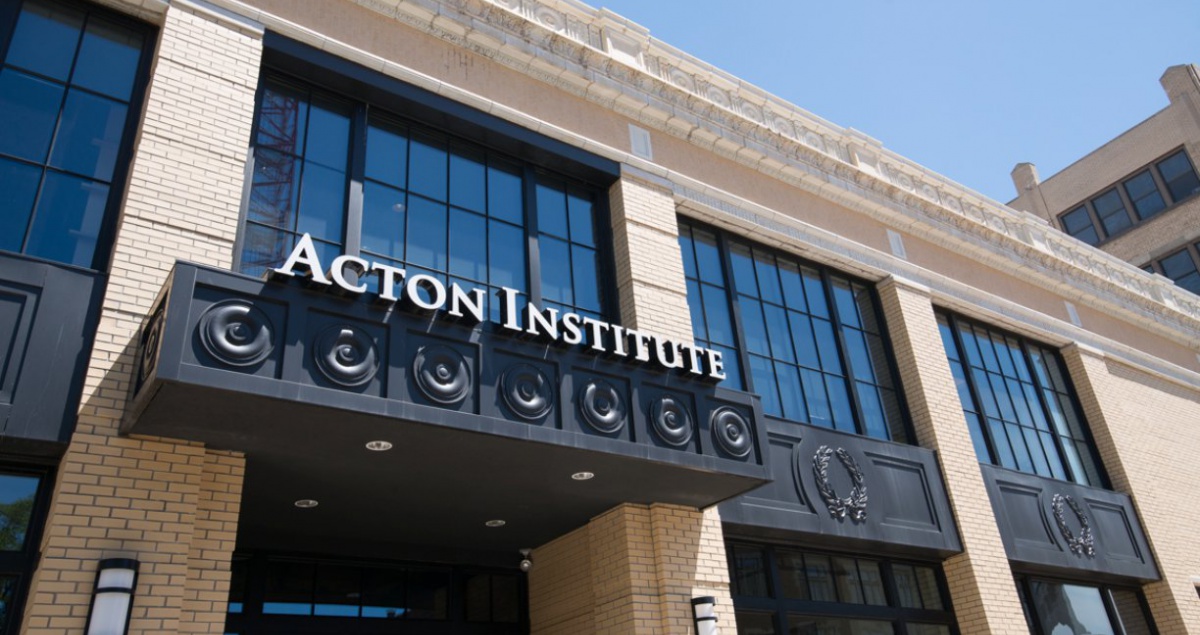
In a new Acton video short, “How not to Help the Poor,” experts on poverty fighting argue that government wealth redistribution has devastated poor communities.

One of the experts interviewed is Robert Woodson, a former Civil Rights activist and president of the Center for Neighborhood Enterprise. “We in Washington today lead the nation in 21 separate categories of poverty expenditures,” he notes. “Explain to me why a child born in Washington D.C. has a life expectancy that’s lower than a child born anywhere in the western hemisphere second only to Haiti. We have the highest per capita expenditure on education and we’re 48th in outcomes for kids.”

Woodson does not find the answer in the history of blacks under slavery but in U.S. social policy after 1960. “The black marriage rate in 1930 to 1940 was higher than in the white community. Eighty-two percent of all black families had a man and a woman raising children. But what happened in 1960 when government intervened with the poverty programs, a major paradigm shift occurred and contributed to the decimation of the family.”

Why do such well-intended programs have such devastating consequences? And what has proven to help lift up the poor? The video short also explores these questions.

An early transcript of the Obama radio interview is available here.
Bookmark Obama Reparations Radio Interview Begs a Question: Does Wealth Redistribution Actually Help the Poor?  at del.icio.us Digg Obama Reparations Radio Interview Begs a Question: Does Wealth Redistribution Actually Help the Poor? Bloglines Obama Reparations Radio Interview Begs a Question: Does Wealth Redistribution Actually Help the Poor? Technorati Obama Reparations Radio Interview Begs a Question: Does Wealth Redistribution Actually Help the Poor? Bookmark Obama Reparations Radio Interview Begs a Question: Does Wealth Redistribution Actually Help the Poor?  at YahooMyWeb Bookmark Obama Reparations Radio Interview Begs a Question: Does Wealth Redistribution Actually Help the Poor?  at Furl.net Bookmark Obama Reparations Radio Interview Begs a Question: Does Wealth Redistribution Actually Help the Poor?  at reddit.com Bookmark Obama Reparations Radio Interview Begs a Question: Does Wealth Redistribution Actually Help the Poor?  with wists Bookmark using any bookmark manager!

UPDATED: Mitt Romney -- Reassuring Evangelical Voters?

Thursday, December 6, 2007
Presidential candidate Mitt Romney is expected to address the topic of his Mormon faith in a speech at the George Bush Library in College Station, Texas, tomorrow. The obvious comparisons are being made to President John F. Kennedy, a Roman Catholic, who gave a speech in 1960 to assuage the concerns of American protestants over papal influence in the White House.

Kennedy’s speech to the Greater Houston Ministerial Association can be found here. In addition, there is also a link for the question and answer portion of his speech found here.

How much does Mitt Romney’s Mormon faith play into his recent slip in Republican primary polls? Some polls have pointed to the fact that one in five of all voters would not support a Mormon candidate for president. But Romney has picked up the support of many evangelical leaders, including the very conservative Bob Jones III, president of Bob Jones University. For the record, Jones believes, like many conservative evangelicals, that Mormonism is a cult. While the cult language may be too strong, Mormonism certainly falls outside of Christian orthodoxy.

Theological differences aside, many evangelicals support Romney for his new found conservatism, and as the best conservative alternative to former New York Mayor Rudy Giuliani. Romney previously supported abortion as Governor of Massachusetts, and was once seen as a strong defender of gay rights. He has since altered his stances on those issues to better attract more conservative Republican primary voters.

In his speech Romney will probably avoid any serious theological discussion of the Mormon faith, while stressing the shared sense of moral and political values he shares with conservative Christians. It is obviously wise for voters to support the candidate who best fits their world view.

Understandably, conservative Methodists would not vote for Hillary Clinton just because she is a United Methodist. The same thing could be said about left of center United Methodists and their unlikelihood to vote for another fellow Methodist, President Bush.

It’s a process that has continually played itself at the ballot box before. In 1980, evangelicals overwhelmingly supported President Reagan over confessed born again Christian, Jimmy Carter. Reagan’s brand of conservatism resonated powerfully with evangelical voters. While Reagan was also a Christian, he was not as outspoken in his Christianity as Carter. In addition, Reagan was also the first divorced man to be elected president.

Romney should be supported or opposed on the issues, and not for the simple fact that he is a Mormon. Romney can use the speech to highlight similarities with all traditional faith communities in America, and the shared American heritage of religious freedom.

For further information on this issue listen to the radio interview titled Romney, Giuliani, Faith & Politics . The interview is with Acton’s Education Director Michael Miller, who appeared on Mitch Henck’s radio show, Outside the Box. Miller also appeared on John Watson’s radio program to discuss “Romney’s Faith and the Presidency.”

Update: A link to the text of the speech can now be found on Mitt Romney’s campaign website. In addition, there is also a link to the video of the speech found here.

Quote from Romney’s speech today:

“Freedom requires religion just as religion requires freedom. Freedom opens the windows of the soul so that man can discover his most profound beliefs and commune with God. Freedom and religion endure together, or perish alone.”
Bookmark UPDATED: Mitt Romney -- Reassuring Evangelical Voters?    at del.icio.us Digg UPDATED: Mitt Romney -- Reassuring Evangelical Voters?   Bloglines UPDATED: Mitt Romney -- Reassuring Evangelical Voters?   Technorati UPDATED: Mitt Romney -- Reassuring Evangelical Voters?   Bookmark UPDATED: Mitt Romney -- Reassuring Evangelical Voters?    at YahooMyWeb Bookmark UPDATED: Mitt Romney -- Reassuring Evangelical Voters?    at Furl.net Bookmark UPDATED: Mitt Romney -- Reassuring Evangelical Voters?    at reddit.com Bookmark UPDATED: Mitt Romney -- Reassuring Evangelical Voters?    with wists Bookmark using any bookmark manager!